2,600 Acres of Private Trail
A weekend ride can go sideways before the first trail if you arrive with the wrong machine, assume every route is open, or mistake private-park rules for public-road permissions. Carolina Adventure World near Winnsboro offers a large private riding area, but planning ahead matters. This guide explains what to expect, how to prepare, and what to check before hauling your ATV or UTV.
What to Know About Carolina Adventure World’s Private Trail Area
Understanding the 2,600 acres and trail network
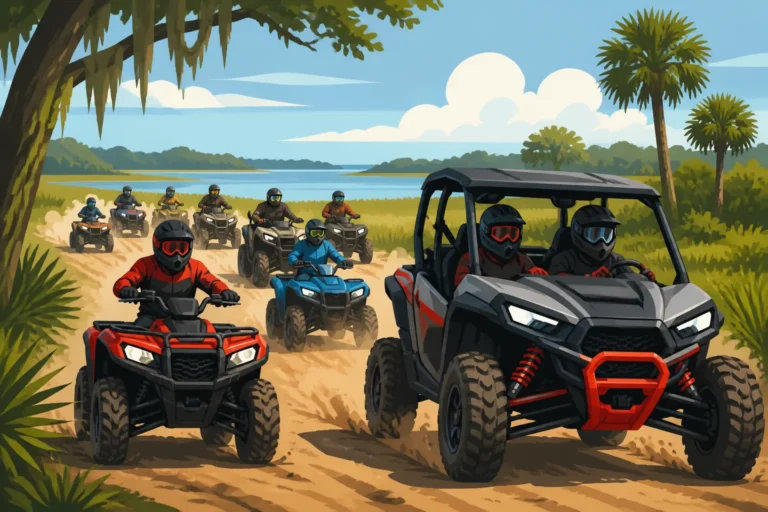
Carolina Adventure World is a private riding park near Winnsboro in Fairfield County. The park is associated with roughly 2,600 acres of riding property and a trail network described as extending across about 100 miles. Those numbers give you a sense of the scale, but they do not mean every acre is rideable or every trail is open on the day you visit. Land, trails, and conditions can be managed differently across the property.
It helps to think of the acreage as the setting for a varied riding experience rather than a promise of a certain route. You might spend much of a visit on easier woods trails, while another group is looking for steeper sections, mud, or more technical terrain. A long network can also mean more time between the staging area and the places you want to explore. Plan for the kind of day you want, but leave room to change course if weather, closures, or your group’s energy call for it.
A private park is not the same as a public trail system. Access is controlled by the property and subject to the park’s rules, operating schedule, and admission or vehicle requirements. Before traveling from Columbia, Greenville, Charleston, or farther away, confirm directly with the park what is open and what your group needs to bring. The overview at [Carolina Adventure World's 2,600 Acres] can help you get oriented, while [Carolina Adventure World's 100 Miles] is a useful companion if you are comparing the size of the trail network.
Private-park access is different from public-land riding
The word “private” matters. A trail being visible on a map does not give the public permission to use it, and access at a private riding park does not give you permission to ride on nearby private roads or land. Stay within the park boundaries and follow posted signs, staff instructions, and any route restrictions. A gate, closed trail sign, or marked boundary is a real limit—not an invitation to find another way through.
This distinction can prevent a frustrating misunderstanding. A rider may be accustomed to forest roads or public trails and assume the same access rules apply at a private facility. They do not. Private parks set their own visitor rules, which may address check-in, vehicle eligibility, helmets, passengers, speed, alcohol, camping, noise, and operating hours. Review those details before you leave home rather than trying to sort them out in the staging area.
South Carolina’s statewide rules still matter where they apply, but they do not replace a park’s own policies. Likewise, a park’s permission to ride inside its boundaries does not make an ATV street-legal or authorize a ride along a public road. For broader context on public and private access, see [South Carolina Public Land Compared to Private] and [South Carolina Private Park Passes and Rules]. If your trip involves public forest routes as well, [South Carolina ATV Trails: Where to Ride] can help you distinguish those options from a private riding park.
Choosing a Machine and Planning a Route
Match the trail day to your ATV or UTV
Before loading the trailer, check that your machine is appropriate for the park’s current requirements and the kind of terrain your group plans to ride. A compact trail ATV, a youth quad, a dirt bike, and a full-size side-by-side are not interchangeable when a park sets entry, width, passenger, or route rules. Do not assume that a machine accepted at one riding area will automatically be allowed everywhere at another.
The same goes for trail choice. A route that looks manageable on a map may feel quite different when it is rutted, slick, rocky, or crowded. Newer riders often have a better day by starting on easier trails and working up gradually, rather than following an experienced friend straight into a challenging section. For a mixed group, agree beforehand that nobody has to ride beyond their comfort level. Splitting into groups can be safer than pressuring a beginner to keep pace.
If you ride a side-by-side, confirm the park’s current vehicle rules before departure. Width, passenger capacity, required equipment, and route restrictions can affect where you can ride. The guide [South Carolina Trails That Allow Side-by-Sides] provides useful statewide trail-planning context, and [South Carolina Private Park Vehicle Passes] is relevant when you are checking what a private park requires for vehicles. Neither should replace the park’s own current instructions.
Use maps as planning tools, not permission to ride
A trail map can help you understand the layout, plan a meeting point, and avoid wandering around when your group gets separated. An app such as onX Offroad can be useful for preparing a route and keeping track of your general location, especially when you are unfamiliar with the area. Download or save the information you need before you arrive; cell service can be unreliable in wooded or rural areas.
At a private park, though, a digital map is only a planning aid. It may not show a temporary closure, a newly posted restriction, or a route that is reserved for a particular type of vehicle. Follow the park’s official map, signs, and staff guidance first. If onX Offroad displays a line that seems to lead toward a boundary or a closed section, do not treat the app as permission to continue. Stop and confirm the route through an official park source.
Before riding, pick a simple check-in plan with your group. Decide where to meet if someone gets separated, agree on a turnaround time, and make sure each rider knows the staging area name or another clear landmark. OnX Offroad may help riders orient themselves, but it should not be your only communication method or your only source of navigation. A phone battery can run down, a device can be damaged, and a group can lose signal.
| Planning question | What to check before you go |
|---|---|
| Is the park open? | Confirm operating days, hours, and any weather-related changes with the park |
| Is my machine allowed? | Check vehicle type, size, passenger, and equipment requirements |
| Which trails fit my group? | Review the official map and choose routes suited to the least experienced rider |
| What if a route is closed? | Follow posted signs and ask park staff for an open alternative |
| Will my phone work? | Save maps and important details ahead of time, and plan a meeting point |
| What do I need at check-in? | Verify the park’s current admission, vehicle, and identification requirements |
Preparing for a Better Riding Day
Check weather, trail conditions, and park requirements
South Carolina weather can change a ride quickly. Rain may make clay and dirt routes slick, while a hot, humid day can turn a short loop into a tiring outing. Even when the forecast looks manageable, conditions in wooded terrain can differ from what you see at home. Check the forecast for the Winnsboro area and ask the park about trail conditions before loading up.
A recent downpour can create deep ruts or muddy sections, and dry spells can bring dust. Neither condition is automatically a reason to cancel, but both affect visibility, traction, and the pace your group should keep. Give yourself enough time to ride cautiously and stop when needed. If you are meeting friends at the staging area, agree that the group will regroup after a difficult section rather than letting the fastest riders disappear ahead.
Park operations and trail availability can change for maintenance, events, weather, or safety reasons. That is why it is worth checking the park’s official communications close to your visit. For broader seasonal planning, [South Carolina Trail Closures After Rain] explains why a route can become unavailable even when the broader riding area remains open. If you are new to the area, [South Carolina Trail Conditions Before You Haul] is another helpful reminder to verify conditions before making a long drive.
Pack for the ride and the ride home
A little preparation saves time and prevents small problems from becoming the main event. Bring the protective gear required by the park and appropriate for your machine and riding conditions. Pack water, weather-appropriate clothing, a basic first-aid kit, and any personal medications your group may need. Keep essentials accessible rather than buried under tie-downs and spare gear.
Check the machine before it goes on the trailer. Look over tires, brakes, lights, steering, and fluid levels, and make sure any required safety equipment is present and working. Secure the machine carefully for transport and double-check your trailer connection, straps, and tie-down points before leaving. A trail day is much less enjoyable when it starts with a loose load or a preventable mechanical issue.
A useful packing plan also accounts for the trip back. Clay and mud can be hard to remove from a machine and trailer, so bring what you need to contain dirty gear and keep the tow vehicle reasonably clean. If your group plans to stay overnight, confirm whether the park offers the facilities you expect and whether you need to reserve a site or lodging separately. The details in [South Carolina Riding Areas With Wash Stations] and [South Carolina Campgrounds Next to a Riding Area] can help you think through those practical needs without assuming every facility is available on every visit.
Riding Responsibly at a Private Park
Follow posted rules and keep the group together
Once you arrive, check in as directed and make sure everyone in your group understands the park’s rules. It can feel tedious to go over basics when everyone is eager to unload, but a brief conversation helps avoid confusion later. Agree on who is leading, who is riding at the back, where you will stop, and what to do if someone has a mechanical problem.
Ride at a pace that leaves room to react. Keep enough distance to see and avoid dust, roost, or sudden stops. On narrow trails, slow down when visibility is limited and be considerate when meeting other riders. Do not assume that a familiar trail will be empty or that other visitors can see you around a bend. A quieter, more controlled pace is especially helpful when children, beginners, or mixed-experience riders are in the group.
Respect trail markers and staff instructions even if a detour appears inconvenient. Shortcuts can lead to private areas, unsafe terrain, or places where riding is prohibited. The park’s rules are also likely to address matters such as passengers, helmets, alcohol, pets, and quiet hours. Review the specific policies before your visit, and do not rely on what a friend remembers from a previous trip. Park rules can change.
Know when to change the plan
A good ride does not have to mean covering the most distance or tackling the hardest obstacle. If the weather turns, a rider becomes tired, or a machine starts behaving unusually, pause and reassess. Continuing because the group has already driven a long way is not a good reason to take a risk. A shorter ride with everyone accounted for is better than pushing into a situation that exceeds the group’s ability.
Keep an eye on time and fuel, and avoid starting a long route late in the day if you are unsure how long it will take. Establish a turnaround time and stick to it. If someone separates from the group, use the meeting plan you agreed on rather than sending several riders off in different directions. If there is an urgent safety issue, follow the park’s procedures and contact staff as soon as practical.
For riders who are new to private parks, it can help to read [South Carolina Trail Etiquette Locals Expect] before heading out. And if your trip includes public forest trails on another day, review the separate requirements for those locations; private-park access and public-land access are not interchangeable. A little route planning, a clear group plan, and respect for the boundaries will make Carolina Adventure World easier to enjoy—whether you arrive for a relaxed family outing or a full day of challenging trail riding.
Disclaimer
This article is for general informational purposes only and does not constitute professional advice. Laws, prices and regulations vary by location and change over time. Consult a qualified professional for guidance on your specific situation.