South Carolina Blaze Orange in Hunting Season
South Carolina’s fall riding season can put ATVs and UTVs on forest trails while hunters are moving through nearby woods, creating a visibility problem even when your route is open. Blaze orange helps other people spot you sooner, but the rules depend on the land and activity. This guide explains how to plan a safer ride, what to wear, and what to check before hauling out.
Why Blaze Orange Matters During South Carolina’s Hunting Season
Visibility is a shared responsibility on wooded trails
A machine can be noisy and still hard to see. Dense pine stands, hardwood bottoms, rolling ground, and bends in a narrow trail can hide a rider until the last moment. A dark jacket or camouflage riding gear can blend into the background, especially in low light, under a canopy, or when dust and leaves reduce contrast. Blaze orange gives other trail users a bright visual cue that is easier to notice through trees.
That matters even if you are riding legally on an established OHV route and have no intention of hunting. A hunter may be walking to a stand, crossing a path, or working near a forest road. Other riders, hikers, and land managers may also be moving through the area. Bright clothing will not prevent every close call, but it can give someone more time to recognize a person and respond.
Think of orange as one layer in a broader safety routine, not a substitute for slowing down or watching carefully. Reduce speed near intersections, blind corners, trailheads, and places where foot traffic may enter the route. If you encounter someone on foot, stop or move past slowly once there is enough room. A visible rider who is also predictable is easier to share a trail with.
Hunting season does not make every trail open to riding
A common source of confusion is the assumption that all public land has the same access rules. South Carolina’s national forests, OHV trails, wildlife management areas, and privately operated riding parks are different kinds of places. A trail being inside or near forest land does not automatically mean every nearby road or tract is open to ATVs.
In particular, do not treat a Wildlife Management Area as an alternate route around a closed trail. Access and vehicle rules can be restrictive, and riding an ATV on a WMA may be prohibited even when hunting is allowed there. Review [South Carolina WMA Riding Is Prohibited] before planning a route that seems to cross wildlife land, and check the specific area’s posted rules.
South Carolina riders often use designated routes in the national forests, including the trails discussed in [South Carolina's Four National Forest Trails]. Those routes are not interchangeable with every forest road, timber road, or nearby hunting access road. Check official maps and local notices before you go, and look for signs at the trailhead. If the map, sign, or access status is unclear, choose a confirmed route rather than gambling on a shortcut.
Where Blaze Orange Rules Apply and What Riders Should Do
Separate hunting requirements from riding recommendations
Blaze orange requirements are tied to hunting regulations, the type of hunt, and the land where hunting occurs. A person who is hunting or accompanying hunters may have specific visibility obligations during certain seasons. A recreational rider who is not hunting may be covered by different rules—or may not be subject to the same requirement at all. The details can vary with the area and activity, so do not assume one statewide rule answers every trail question.
For riders, the practical distinction is this: legal requirement and sensible precaution are not always the same thing. Even if a non-hunting rider is not required to wear orange on a particular designated trail, wearing a bright outer layer during busy hunting periods is a straightforward way to improve visibility. On the other hand, wearing orange does not grant permission to ride on land where motorized access is prohibited.
Before your trip, check the current South Carolina hunting regulations for the specific season and location, then check the land manager’s vehicle rules separately. If you plan to hunt as well as ride, treat the hunting requirements as a separate checklist. A rider who is carrying hunting equipment, accompanying a hunter, or entering a hunting area should not rely on general trail advice to determine what is legally required.
Use a land-specific check before loading the trailer
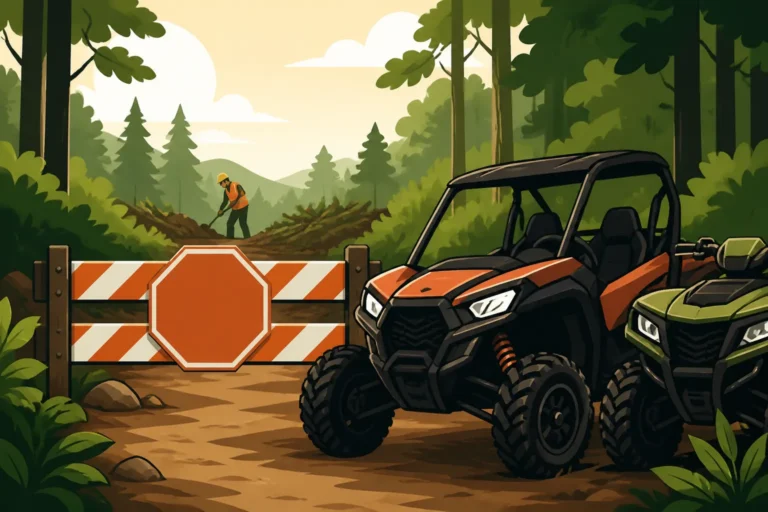
Start by identifying the exact trail or riding area—not just the nearest town or forest name. A route near Sumter National Forest, for example, may pass close to private timberland or wildlife land with different access rules. Trail names can also sound similar, while their operating hours, seasonal closures, and vehicle restrictions differ.
Check the official land manager’s information and the posted signs at the entrance. Pay attention to the actual route boundary, any seasonal notice, and whether a trail is open to your machine type. [South Carolina Trail Conditions Before You Haul] is a useful companion topic for building this check into your trip planning. A map app such as onX Offroad can help you review route options and identify nearby land boundaries, but a digital map should not be treated as permission to cross a boundary or ignore a closure.
If the route touches more than one land type, verify each section. A trail may begin on an authorized OHV route and then approach a gated road, a WMA boundary, or private property. Do not assume the color of a line on a screen is enough to establish access. Carry a paper or saved map as a backup, and be prepared to turn around when signs or current land-manager guidance indicate that a segment is closed.
| Situation | Blaze orange approach | Access check |
|---|---|---|
| Riding a designated OHV trail during hunting season | Wear a bright orange outer layer as a visibility precaution | Confirm the trail is open to your machine and check posted notices |
| Hunting or accompanying a hunter | Follow the current hunting rules for the species, season, and land | Check the relevant regulations and area-specific rules |
| Riding near a WMA | Do not assume orange makes motorized access legal | Verify vehicle access; many WMAs prohibit ATV riding |
| Using a private riding park | Follow the park’s own clothing, helmet, and operating rules | Check the park’s current notices before travel |
| Unsure whether a route crosses a boundary | Pause and confirm before proceeding | Use official maps, signs, and land-manager information |
Choosing and Wearing Orange for an ATV or UTV Ride
Make the bright layer visible from more than one direction
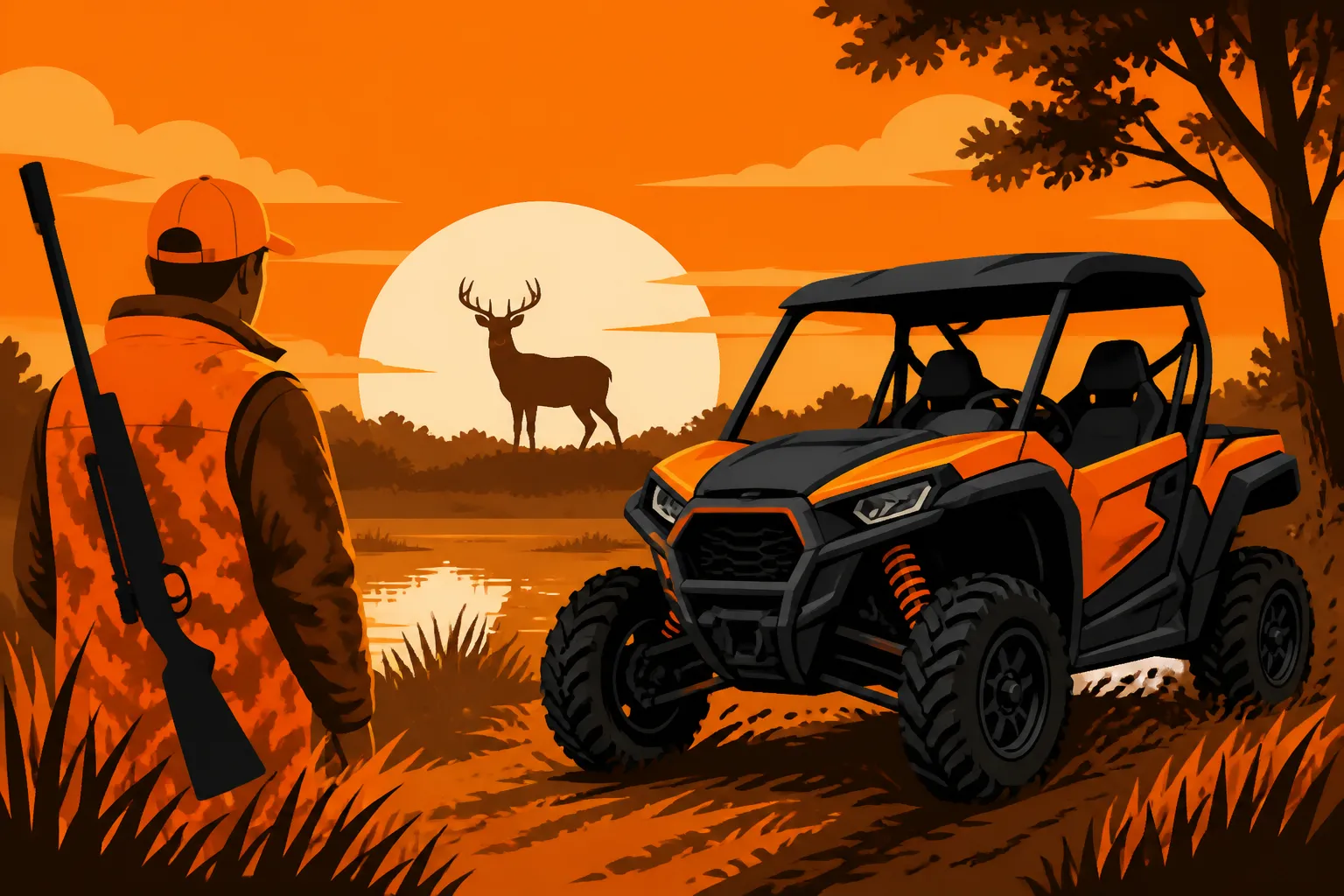
A small orange patch on a backpack may disappear when you turn sideways, sit down, or lean forward. Choose an outer layer that remains easy to see from the front, side, and back. A vest or jacket worn over darker riding gear is often more visible than a small accessory, and orange panels on a helmet or pack can add another point of contrast.
Consider how the clothing will sit once you are riding. A vest that rides up behind a backpack, a jacket hidden by a seat belt, or a bright shirt covered by a dark rain shell may not do much good. For UTV occupants, make sure the orange can be seen above the doors or side panels when you are seated. Riders should also avoid attaching loose fabric where it could catch on controls, branches, or moving parts.
Keep visibility clothing separate from camouflage if you are combining a ride with hunting. A blaze-orange layer should not be hidden under a pack or removed and left in the machine when you walk away. If you have to leave the vehicle, carry the bright layer with you. A headlamp, reflective details, and machine lights can add visibility in appropriate conditions, but they do not replace any legally required hunting clothing.
Balance visibility with weather, comfort, and protective gear
Fall rides in South Carolina can feel cool at the trailhead and warm once the group is moving. A heavy orange coat may become uncomfortable, leading someone to unzip it or take it off. A lightweight, breathable vest over appropriate base layers can be easier to keep on throughout the ride. Pack a rain shell that stays visible too; a dark waterproof layer can conceal the orange underneath.
Do not let a bright garment interfere with a helmet, eye protection, gloves, or other protective equipment. Make sure sleeves do not block your grip, and avoid loose straps that can snag. For UTV riders, check that clothing does not bunch beneath the seat belt or keep the belt from fitting correctly. Visibility should add to safe riding gear, not compromise it.
Check the garment before the trip. Mud, dust, and repeated washing can dull bright fabric, while rips and stretched closures can make a vest flap or shift. Keep a spare in the tow vehicle if your group rides through different weather or expects to spend time off the machine. The goal is simple: everyone in the group should remain easy to identify without having to stop and rearrange gear on the trail.
Planning a Ride When Hunters May Be Nearby
Build the route around confirmed access and current conditions
Before leaving home, write down the trailhead, intended loop, backup route, and likely turnaround point. Check whether the route is open and whether the machine fits any width or vehicle restrictions. The map in your phone is useful, but signal can disappear in wooded areas. Save the relevant map offline or bring a paper version, and make sure someone in your group knows how to read it.
If you use onX Offroad to inspect a route, treat it as a planning aid rather than the final authority on access. Compare what you see with land-manager information and trailhead signs. A boundary or route line can help you ask better questions, but it does not replace permission, closure notices, or official vehicle restrictions. This is especially important where trails, forest roads, private timber tracts, and hunting areas sit close together.
Look at the weather and recent trail notices as well. Heavy rain can change a route quickly, and hunting activity can make a normally quiet area busier than expected. [South Carolina Trail Closures After Rain] covers another reason to check before driving to the trailhead. If conditions are uncertain, call the managing office when practical or choose a route with clear, current access information.
Ride in a way that gives other people room to react
Keep speed low enough to stop within the distance you can see. This is especially important on narrow routes, at trail intersections, and on roads where brush limits sightlines. A horn or shouted warning may help in some situations, but do not rely on noise to announce your presence; sound can be difficult to locate in woods and may be masked by other machines.
When approaching a person on foot, slow to a crawl and stop if the trail is narrow or visibility is poor. Give them time to move to a safe place before proceeding. If you are riding in a group, avoid crowding the person with several machines at once. Let the lead rider communicate, then move past at a controlled speed with enough space for everyone.
Group discipline matters just as much as clothing. Keep the group together without tailgating, use agreed hand signals or radios where available, and stop at safe pullouts rather than blocking intersections. Follow local noise and equipment rules; [South Carolina Sound Limits on Forest Land] and [South Carolina Spark Arrester Checks] are relevant reminders that trail access comes with responsibilities beyond staying visible. Good etiquette helps keep the route safer for riders, hunters, and other visitors.
A Practical Before-You-Ride Checklist for Hunting Season
Check the route, rules, and gear the day before
Start with a short planning routine rather than trying to answer every question at the trailhead. Confirm the designated route, the land manager, operating status, machine restrictions, and any seasonal notices. If you are riding in a group, share the route and meeting point with everyone before the vehicles leave the driveway. A rider who arrives late should not have to guess which trail the group chose.
Then lay out the gear you will actually wear: helmet, eye protection, gloves, suitable footwear, and a visible orange layer. For UTVs, check that each occupant has the required restraint and that the orange remains visible while seated. Pack water, basic first aid, a charged phone, and a backup navigation option. If weather may shift, choose a visible rain layer rather than assuming your orange vest will stay exposed.
Finally, review the hunting context. Are firearms seasons active in the area? Is the route next to a WMA or private hunting land? Are there signs or notices directing visitors away from a section? [South Carolina Hunting Season and Trail Access] and [Sharing a Sumter Forest Trail With Hunters] can help you think through that overlap. If an access question remains unanswered, change the plan before you tow the machine.
Use this simple checklist at the trailhead
Pause before unloading and compare the plan with what is posted on the ground. Look for closure signs, altered trail markers, hunting notices, gates, and any indication that the route differs from the map. Confirm that the group’s machines are permitted on the route and that everyone understands the planned turnaround point.
A quick group check can catch easy-to-miss problems: someone left their orange vest in the truck, a phone map was not downloaded, or a machine’s lights are not working. Make sure riders know what to do if the group gets separated. Choose a safe meeting location that does not block the trail or put anyone in the path of other vehicles.
Use the following checklist as a final pass:
- Confirm the trail is open and legal for your machine.
- Check whether the route borders a WMA, private property, or another restricted area.
- Read trailhead signs and follow any seasonal instructions.
- Wear blaze orange where it will remain visible while seated and moving.
- Carry a saved or paper map and tell someone your route.
- Slow down at blind corners, crossings, and places where people may be on foot.
- Turn around if access is unclear rather than crossing a gate or boundary.
That routine is not complicated, but it prevents a frustrating situation: arriving after a long tow and discovering that the route is closed, unsuitable for your machine, or not open to motorized use. [South Carolina Trail Etiquette Locals Expect] offers more context on sharing routes responsibly, while [South Carolina Forest Passes Are Per Person] is useful when your destination requires a forest pass. Treat orange as one part of the plan, alongside legal access, careful riding, and respect for other people using the land.
Disclaimer
This article is for general informational purposes only and does not constitute professional advice. Laws, prices and regulations vary by location and change over time. Consult a qualified professional for guidance on your specific situation.