Sharing a Dirt Road With Loaded Log Trucks
Riding your ATV or UTV on the beautiful, often remote, dirt roads of South Carolina can be an incredible experience, offering access to stunning natural landscapes. However, many of these same roads are vital arteries for the state's robust timber industry, meaning riders often find themselves sharing the path with fully loaded log trucks. This isn't just an inconvenience; it's a serious safety concern that demands your full attention. The sheer size, speed, and unpredictable nature of these behemoths on unpaved surfaces can turn a relaxing ride into a high-stakes gamble. This guide will walk you through the very real dangers these encounters pose and equip you with practical strategies to stay safe, ensuring your time on the trails remains enjoyable and accident-free.
The Unique Dangers of South Carolina Dirt Roads
South Carolina's dirt roads, especially those that wind through forests and rural areas, hold a particular charm. They offer a taste of adventure, an escape from pavement, and often lead to some of the most serene spots. But beneath that rustic appeal lies a complex environment, particularly when you factor in the presence of commercial logging operations. This isn't your average gravel lane; these are working roads, and the vehicles that use them are designed for heavy industry, not leisurely recreation. Understanding the specific threats is the first step toward mitigating them.
The Sheer Size and Speed of Log Trucks
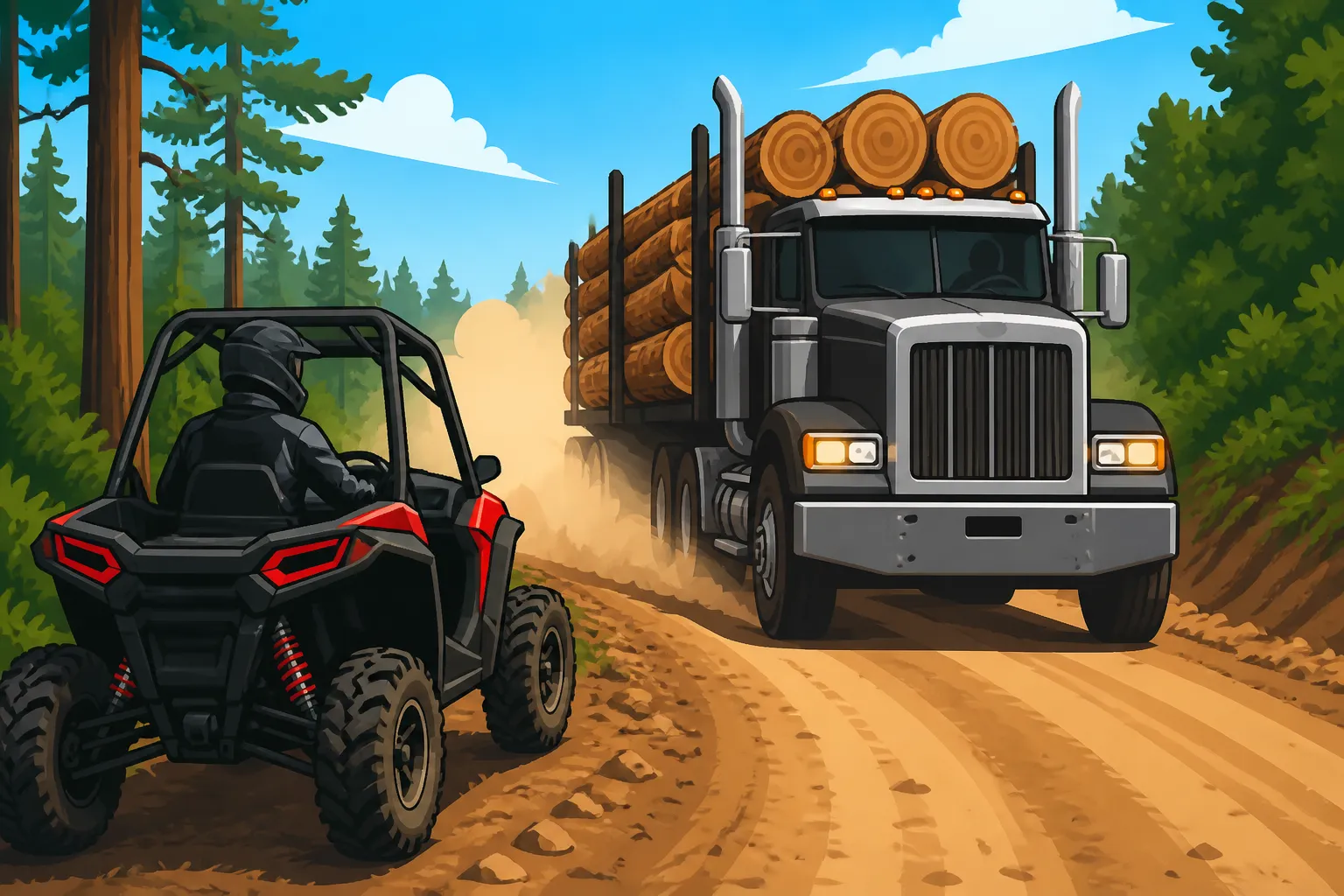
When you're out on your ATV or UTV, even a full-size pickup truck can feel substantial. Now, imagine a fully loaded log truck. These are not only massive, weighing tens of thousands of pounds, but they also have immense momentum. They don't stop on a dime, especially on loose dirt or gravel. A truck traveling at 40-50 mph on a dirt road, often with a tight schedule to keep, requires a significant distance to slow down, let alone come to a complete halt.
Think about meeting one of these giants around a blind curve. Your nimble quad or side-by-side might be able to swerve, but the truck driver has far fewer options. The width of these trucks, often carrying logs that extend beyond the trailer, can take up nearly the entire width of a single-lane dirt road. There's simply no contest in a collision; the ATV or UTV and its occupants will always be on the losing end. This reality alone should instill a deep sense of caution whenever you anticipate sharing these roads.
Dust, Blind Spots, and Limited Visibility
One of the most immediate and pervasive dangers on dry dirt roads is the dust cloud. A single log truck can kick up a massive plume of fine particulate matter that lingers in the air for minutes, completely obscuring vision for anyone behind it or approaching from the opposite direction. This isn't just a nuisance; it creates a temporary, but utterly impenetrable, blind spot for both the truck driver and the ATV/UTV rider. You could literally be driving blind for precious seconds, and on a narrow road, that's a recipe for disaster.
Beyond the dust, log trucks have enormous inherent blind spots. The driver's view is primarily forward and through large side mirrors, but the areas directly beside and behind the truck, especially near the trailer, are invisible. Your smaller machine can easily disappear into these zones. Add in winding roads, hills that create crests, and dense tree lines common in South Carolina's timber country, and visibility becomes an even more critical, and often compromised, factor. Sun glare, particularly at dawn or dusk, can further reduce the ability to spot an approaching vehicle or rider. [Riding Through Dust on a Dirt Road] is a constant concern here.
Unpredictable Road Conditions
South Carolina's dirt roads are rarely a smooth, consistent surface. They are constantly impacted by weather, traffic, and the sheer weight of logging operations. You'll encounter everything from bone-jarring washboards and deep potholes to loose gravel, sand patches, and eroded ruts. Heavy log truck traffic exacerbates these conditions, grinding down the surface and creating uneven terrain.
Rain can transform these roads into slick, muddy quagmires, drastically reducing traction and increasing stopping distances for all vehicles. Dry spells, on the other hand, produce more dust and can leave the surface hard-packed but still riddled with unexpected hazards. Beyond the road itself, you might find debris such as fallen branches, chunks of wood, spilled gravel, or even rocks that have been dislodged from truck tires. These conditions demand constant vigilance and can easily lead to a loss of control for an ATV or UTV, putting you directly in harm's way if a truck is approaching.
Essential Safety Strategies for ATV and UTV Riders
Given the significant risks involved, adopting a proactive and highly cautious approach is absolutely non-negotiable when sharing South Carolina's dirt roads with log trucks. It’s not enough to simply be aware of the dangers; you must actively implement strategies to protect yourself and those riding with you. Think of every ride on these roads as a mission to be as visible, predictable, and prepared as possible.
Be Seen: Maximizing Your Visibility
One of your most potent defenses against a collision with a log truck is simply being seen. Because your ATV or UTV is so much smaller, you need to go out of your way to stand out. Start with your machine's lighting. Factory headlights and taillights are a good baseline, but consider auxiliary lights, especially if you might be out during dawn, dusk, or in heavily shaded areas. Bright LED light bars or cube lights, perhaps from a brand like SuperATV, can dramatically increase your presence on the road. Some riders even add amber or red dust lights to the rear of their machines, which are specifically designed to cut through thick dust clouds and alert drivers behind them.
Beyond your machine, your personal gear plays a crucial role. Wear bright, high-visibility clothing – fluorescent yellows, oranges, and greens are excellent choices. A reflective vest worn over your riding gear can be a lifesaver. Consider adding reflective tape to your helmet, the front and rear of your ATV/UTV, and even your backpack. The more you stand out against the natural backdrop and the dust, the better your chances of being spotted by a truck driver who is likely focused on the road ahead and not necessarily expecting a small, fast-moving vehicle. If you're on a country road, [Being Seen After Dark on a Country Road] takes on even greater importance, even if you don't plan to be out late.
Defensive Riding and Situational Awareness
Defensive riding means constantly anticipating potential hazards and assuming other drivers might not see you or act predictably. On dirt roads frequented by log trucks, this means slowing down, especially on blind curves, over hillcrests, and at intersections with other dirt roads. Your ability to stop or swerve safely dramatically decreases at higher speeds.
Use all your senses. Listen for the distinct sound of a diesel engine, the hiss of air brakes, or the rumble of a heavy truck approaching. Look far ahead for telltale signs like dust plumes rising above the tree line, which can indicate an approaching vehicle long before you can see its headlights. Be aware of the time of day; logging operations often start early in the morning. Always assume a truck could be around the next bend, even if you haven't seen one for a while. This constant vigilance is key to reacting in time. If you're thinking about general trail etiquette, consider how it applies to all road users, including loggers. [South Carolina Trail Etiquette Locals Expect] can offer some guidance.
Communication and Yielding the Right-of-Way
When you encounter a log truck, your primary goal is to make it easy and safe for them to pass. This almost always means yielding the right-of-way, regardless of who might technically have it. Log trucks are less maneuverable, have longer stopping distances, and are often on a tight schedule. Your ability to pull over and stop quickly is a significant advantage; use it.
If you spot a truck approaching, especially on a narrow section of road, begin to slow down and move as far to the right as safely possible. If there's a shoulder or a wider pull-off area, use it. Come to a complete stop and wait for the truck to pass. Some riders might use a quick flash of their headlights to signal their presence, but always be cautious not to confuse or distract the driver. Never try to "outrun" a truck or squeeze past it on a narrow stretch. Once the truck has passed, wait for the dust to settle and ensure the road ahead is clear before slowly rejoining your path. Remember that [South Carolina Rules for Riding a Dirt Road] often emphasize safety and common sense over strict right-of-way interpretations in these specific industrial settings.
Preparing Your Machine and Yourself for the Challenge
Riding on South Carolina's dirt roads, especially those shared with log trucks, isn't just about skillful riding; it's also about thorough preparation. Your machine needs to be in optimal condition, and you need to be equipped with the right gear and knowledge. This isn't the time to rely on faulty equipment or hope for the best. A well-maintained machine and a prepared rider are less likely to encounter preventable issues that could escalate into dangerous situations.
Machine Maintenance and Equipment Essentials
Before you even think about hitting those dirt roads, give your ATV or UTV a thorough inspection. Ensure your brakes are in perfect working order, as quick stopping might be necessary. Check your tires for proper inflation and adequate tread depth, as traction on loose surfaces is paramount. Your suspension should be in good shape to handle the unpredictable terrain without losing control.
As discussed, your lighting system is critical. Verify that all headlights, taillights, and any auxiliary lights are functional and clean. Consider upgrading to more robust parts, perhaps from SuperATV, known for their durable components that can withstand tougher conditions, ensuring your machine can handle the demands of these roads. If you ride with others, two-way radios can be invaluable for communicating about approaching trucks or hazards. Always make sure your horn works too – it's a small but potentially life-saving signaling device. Also, remember that [South Carolina Equipment Requirements for ATVs] might cover basics like functional brakes and lights, but you'll want to go above and beyond these minimums for safety. Don't forget that [South Carolina Spark Arrester Requirements] are in place, especially on forest lands, to prevent wildfires – a critical detail on roads bordered by dry timber.
Personal Protective Gear and Emergency Preparedness
Your personal safety starts with your gear. A properly fitting, DOT-approved helmet is non-negotiable. Beyond impact protection, a full-face helmet or a helmet with goggles will protect your eyes and face from the inevitable dust and flying debris kicked up by trucks and your own machine. Long sleeves, long pants, gloves, and sturdy over-the-ankle boots are essential to protect against abrasions, scrapes, and impacts.
Even with the best preparation, unforeseen circumstances can arise. Always carry a well-stocked first aid kit, plenty of water, some high-energy snacks, and basic tools for minor repairs. While cell service can be spotty in remote areas, always have your phone fully charged. Consider carrying a paper map as a backup navigation tool. If you ride in a group, ensure at least one person has satellite communication or a way to signal for help in a dead zone. Thinking about [First Aid on a Long Carolina Loop] isn't just smart, it's essential for peace of mind. And for those times when you find yourself in a sticky situation, a [Winches for a Buried Carolina Machine] could be the difference between a minor delay and a serious problem.
Knowing the Rules and Local Etiquette
Understanding the legal landscape and local customs is also a crucial part of preparation. Familiarize yourself with [South Carolina Rules for Riding a Dirt Road] to ensure you're operating within the law. However, remember that laws are minimums; safety often demands more.
Many dirt roads run through or border private timberland. Always respect private property signs and never trespass. If you know you'll be on private land, ensure you have [Getting Written Permission From a Timber Landowner] in hand. There might also be unwritten rules or expectations from local residents and loggers. For example, some areas might have designated times for logging traffic, or certain roads might be entirely dedicated to industrial use. If you have any doubt, it's always best to ask local authorities or experienced riders. Carrying [What Papers to Carry on a Back Road] – such as your ID, proof of ownership, and any permits – is also a smart habit.
What to Do in an Encounter with a Log Truck
Despite all your preparation and defensive riding, encounters with log trucks on South Carolina's dirt roads are inevitable. When that happens, your immediate actions can dictate the outcome. These moments require quick thinking, calm execution, and a strict adherence to safety protocols. Don't panic, don't rush, and don't take unnecessary risks.
Immediate Actions for Safe Passage
The moment you spot a log truck – whether by sight, sound, or a distant dust plume – your immediate priority is to create space and safety. Start slowing down immediately. Look for the safest spot to pull off the road. This might be a wider shoulder, a small pull-off, or even just as far to the right as you can get without hitting a ditch or obstacle. The key is to get completely out of the active roadway, giving the truck the maximum amount of space possible.
Once you've pulled over, come to a complete stop. Turn off your engine if you feel comfortable doing so, as this can reduce dust from your own machine and help you hear better. Avoid any sudden movements that might be misinterpreted by the truck driver. Wait patiently for the truck to pass. Once it has gone by, resist the urge to immediately pull back onto the road. Wait for the dust cloud it generated to settle and for your visibility to return to normal. This might feel like a long minute, but riding into a lingering dust cloud is like driving with your eyes closed.
After the Encounter: Re-evaluating Your Ride
After a log truck has safely passed, take a moment before continuing. First, scan the road ahead where the truck passed for any debris it might have dropped or kicked up. You don't want to immediately encounter a broken branch or a rock that could cause a flat tire or a loss of control.
Next, take a mental inventory of your own state. Encounters with large trucks, especially when unexpected, can trigger an adrenaline rush. Riding immediately after such an event can lead to carelessness or overconfidence. Take a deep breath, recalibrate your focus, and ensure you're calm and fully aware before proceeding.
If you find yourself encountering multiple log trucks in quick succession, it's a strong indicator that you are in an active logging area. At this point, it's wise to consider altering your route. Is there an alternative path that avoids the heaviest truck traffic? Perhaps this section of road is best ridden during non-working hours, or not at all. Your safety is paramount, and sometimes the best decision is to turn around and find a different adventure.
| Safety Category | Action/Equipment | Explanation |
|---|---|---|
| Visibility | Bright Clothing & Machine | Helps drivers see you from a distance, especially in dust and shaded areas. |
| Auxiliary Lighting | Supplements factory lights, especially with SuperATV light bars, for better illumination and being seen by others. | |
| Reflective Tape | Adds passive visibility to your gear and machine, crucial in low light or dust conditions. | |
| Awareness | Slow Down on Curves | Gives you more time to react to oncoming traffic, particularly around blind bends. |
| Listen for Trucks | Engine noise, air brakes, and the rumble of heavy vehicles can be heard before they are seen. | |
| Watch for Dust Plumes | Indicates a vehicle approaching, even if it's still out of sight. | |
| Action | Pull Over & Stop | Get completely off the active roadway, giving log trucks maximum space to pass safely. |
| Yield Right-of-Way | Assume log trucks have limited maneuverability and stopping power, and prioritize their safe passage. | |
| Wait for Dust to Clear | Prevents riding into a blind cloud created by the truck, which completely obscures vision. | |
| Maintenance | Functional Brakes & Tires | Essential for quick stopping and maintaining traction on unpredictable dirt surfaces. |
| Spark Arrester | Prevents wildfires, especially important in timber country. |
Disclaimer
This article is for general informational purposes only and does not constitute professional advice. Laws, prices and regulations vary by location and change over time. Consult a qualified professional for guidance on your specific situation.