South Carolina Rules for a Visiting North Carolina Rider
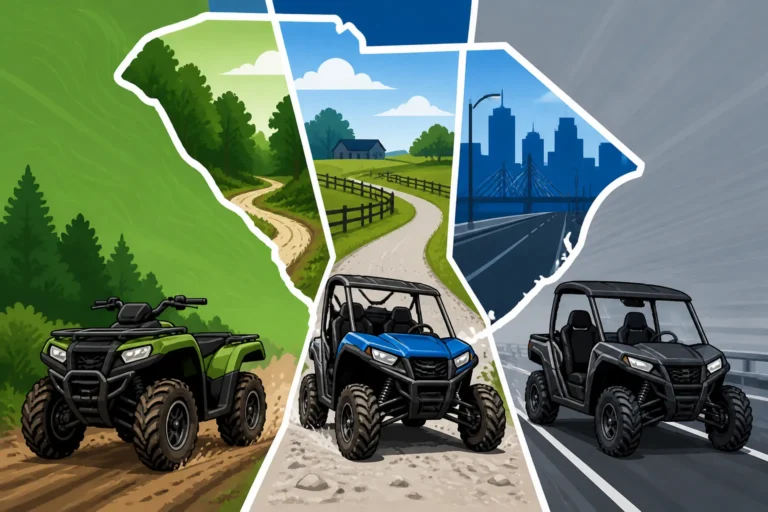
Heading across the state line from North Carolina for some South Carolina ATV and UTV adventure? While both states share a love for the outdoors and off-road riding, it's a huge mistake to assume the rules are the same once you cross the border. Many North Carolina riders find themselves scratching their heads, or worse, facing an unexpected ticket, because South Carolina's laws for off-road machines, especially concerning road access and titling, can be surprisingly different. This guide is here to unravel those differences, helping you understand South Carolina's specific regulations so your visit is packed with fun, not fines.
Understanding South Carolina's Core ATV Laws for Visitors
When you bring your ATV or UTV into South Carolina, you’re now operating under their laws, not North Carolina’s. This might seem obvious, but the nuances are where riders often get tripped up. South Carolina has a distinct approach to off-road vehicles, particularly regarding where they can be ridden and who can ride them. It’s not just about having a machine; it’s about knowing the rules of the road – or, more accurately, the rules of the trail and the property you're on.
Private Property vs. Public Land: Where Can You Actually Ride?
First and foremost, the vast majority of ATV and UTV riding in South Carolina, for visitors and residents alike, happens on private land or designated off-road parks. It's a fundamental principle: if you're not on your own land, you absolutely must have permission from the landowner to ride. This isn't just common courtesy; it's the law. Trespassing is taken seriously, and ignorance of property lines is no excuse. Always make sure you have explicit, ideally written, permission before venturing onto private parcels, especially if you're exploring areas that might look abandoned or undeveloped. Many riders are surprised to learn that what looks like open woods is often privately owned timberland or hunting leases.
Public lands offer some riding opportunities, but they are limited and often come with strict regulations. South Carolina's National Forests, like the Francis Marion and Sumter, offer a handful of designated OHV trails. These trails often require a special pass, which is a separate fee from anything you might pay in North Carolina. Don't just assume that because it's a national forest, it's open season for riding anywhere. Stick to the marked trails, respect width limits – many trails in the national forests have a 50-inch width restriction, which can be an issue for some larger UTVs or those with aftermarket suspension components from brands like SuperATV – and be aware of potential seasonal closures, especially during wet weather to prevent trail damage. You’ll want to look into [South Carolina National Forest OHV Passes] before you head out. Wildlife Management Areas (WMAs) in South Carolina, unlike some areas in North Carolina, generally prohibit ATVs and UTVs entirely, except for very specific uses like retrieving game during certain hunting seasons, and even then, often only on designated roads. Always check with the specific WMA before you plan to ride.
Age, Helmets, and Safety Certificates: Protecting Your Crew
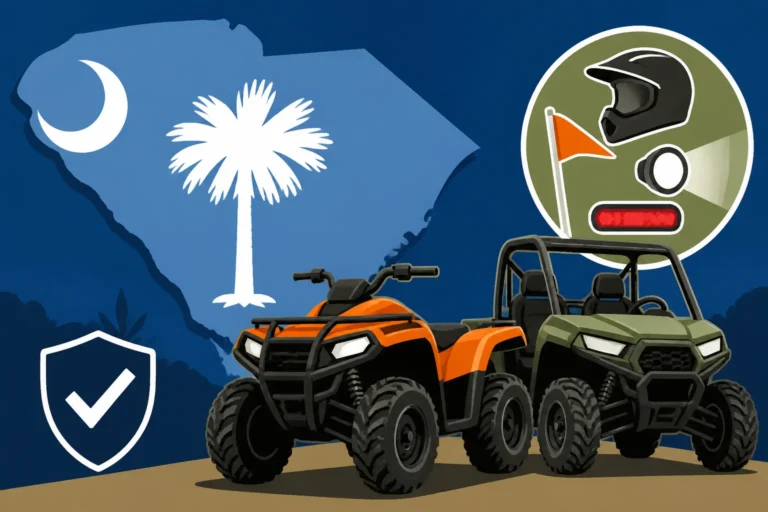
South Carolina takes rider safety very seriously, particularly for younger riders, thanks to what's known as Chandler's Law. If you're bringing kids or teenagers along, pay close attention, as these rules might differ from what you're used to back home. Generally, no one under the age of 6 is permitted to operate an ATV in South Carolina. For riders aged 6 to 15, there are specific requirements. They must have successfully completed an ATV Safety Institute (ASI) safety course and carry proof of certification with them while riding. Furthermore, they must be supervised by an adult at least 18 years old. This isn't a suggestion; it's a legal requirement.
Helmet laws are also strict for younger riders. Anyone under the age of 16 operating or riding as a passenger on an ATV must wear an approved safety helmet. This helmet needs to meet the Federal Motor Vehicle Safety Standard No. 218, which is the same standard for motorcycle helmets. Eye protection is also mandatory for these young riders. For older riders, 16 and above, helmets are not legally mandated for off-road ATV use, but they are always a smart choice for safety. Make sure you understand [South Carolina ATV Age Requirements] before you hit the trails. These rules apply to everyone riding in South Carolina, regardless of their home state, so a North Carolina safety certificate might not be enough if it's not an ASI course.
Road Access for ATVs and UTVs: A Different Ballgame Than North Carolina
This is perhaps the biggest area of confusion and potential legal trouble for North Carolina riders visiting South Carolina. The rules for taking your ATV or UTV onto public roads are significantly different, and misunderstanding them can quickly ruin your trip. North Carolina has various allowances for ATVs on secondary roads or for specific purposes, but South Carolina has historically been much stricter.
Off-Road ATVs and Public Roads: Keep 'Em Off!
For traditional off-road ATVs – the kind you ride on trails, not usually equipped with turn signals, brake lights, and other street-legal accoutrements – South Carolina's stance is unequivocal: they are generally prohibited from operating on public roads, streets, or highways. This includes dirt roads, secondary paved roads, and even the shoulders of roads. There are very limited exceptions, such as for farming purposes or crossing a road at a 90-degree angle to get to another section of private property, but these exceptions are narrow and require extreme caution.
Many North Carolina riders are accustomed to areas where they might legally cross a state road or ride briefly on a county road to connect trails. In South Carolina, that's a risky move. A quick hop across a country lane can lead to a significant fine and even impoundment of your machine. The bottom line for your standard trail quad is simple: keep it off public asphalt and gravel unless you are explicitly in one of those very limited, legal crossing situations. It's a major difference from some areas of North Carolina where such movements are more commonly accepted or even codified. Remember, [Can You Ride an ATV on the Road in South Carolina?] The answer for an off-road ATV is almost always no.
Street-Legal UTVs in South Carolina: What's Allowed (and When)
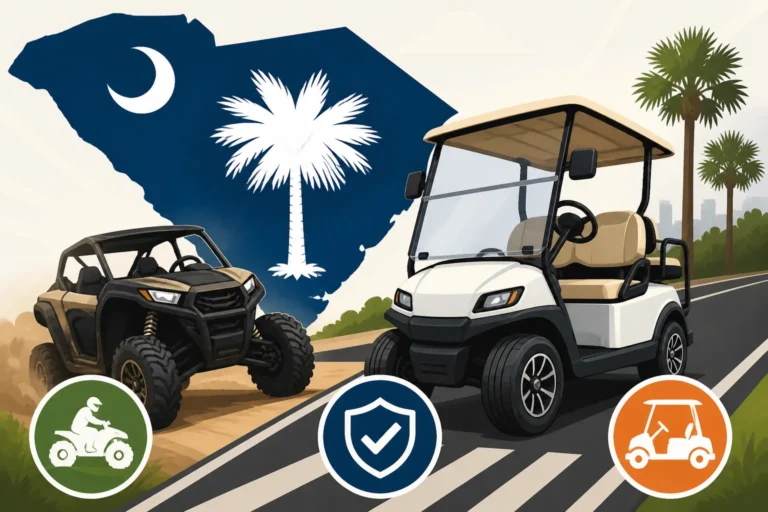
Here's where things get interesting and where South Carolina has recently seen some significant changes that might impact visiting UTV owners. Historically, street-legal UTVs were not a thing in South Carolina, unlike many other states. However, recent legislation has created a pathway for certain UTVs to be registered and operated on public roads. This new law, effective November 2026, allows UTVs that meet specific equipment requirements (like turn signals, seatbelts, headlights, brake lights, horn, and a windshield) and size restrictions (under 80 inches wide, 4,000 pounds) to be registered and plated for road use. You can read more about this in [South Carolina Street-Legal UTV Registration Arrives] and [South Carolina Street UTV Rules From November 2026].
For North Carolina riders with UTVs that are already street-legal in their home state, this is good news, but it's not a free pass. Your UTV must meet South Carolina's specific requirements for equipment and size to be considered street-legal here. If your machine is registered as street-legal in North Carolina, South Carolina generally offers reciprocity for vehicles properly registered and plated in another state. This means if your UTV meets North Carolina's street-legal standards and is appropriately titled and registered there, you should be able to operate it on South Carolina's permitted roads. However, you'll still be subject to South Carolina's rules of the road, including speed limits, and restrictions on which roads street-legal UTVs can use (generally secondary roads with speed limits of 55 mph or less). You won't be able to hop on the interstate or high-speed primary highways. Always carry your North Carolina registration and insurance proof with you. Check your UTV's specifications carefully; some aftermarket modifications, even from reputable sources like SuperATV, might inadvertently push a machine beyond SC's width limits for street legality, even if they're fine in NC.
Paperwork, Permits, and Practicalities for Your Trip
Beyond understanding the riding rules, you also need to make sure you have all your ducks in a row concerning documentation and any required passes. A lack of proper paperwork can lead to delays, frustration, or even prevent you from riding altogether.
Proof of Ownership and Insurance: Don't Leave Home Without It
When you're riding your ATV or UTV in South Carolina, whether on private land, at an OHV park, or, if applicable, on permitted roads, you need to be able to prove that the machine belongs to you and that you're authorized to operate it. For most North Carolina riders, this means carrying your North Carolina title or registration certificate (if titled/registered in NC) and a bill of sale, especially if your state doesn't issue titles for off-road vehicles. While South Carolina's own titling is optional for off-road ATVs – see [South Carolina Titles Are Optional] – you still need to demonstrate lawful possession. A good practice is to carry a copy of your title or registration in a waterproof bag on your machine, or even a photograph on your phone, in addition to physical documents in your tow vehicle.
Insurance is another critical piece of the puzzle. For off-road ATVs used strictly on private land or designated trails, South Carolina does not mandate liability insurance, but it is highly recommended. However, if your UTV is registered as street-legal (either in North Carolina and reciprocated in South Carolina, or under South Carolina's new law), then liability insurance becomes a mandatory requirement for road use. Make sure your North Carolina insurance policy extends coverage to South Carolina and specifically covers off-road or street-legal UTV use. Check with your insurance provider before your trip to understand your coverage limits and whether it applies across state lines. Don't assume your auto policy covers your UTV just because you can drive it on the road in NC!
Forest Passes and Private Park Rules: Planning Your Ride
If you plan to ride in one of South Carolina's National Forests, like the Enoree OHV Trail or Parsons Mountain OHV Trail, you will need to purchase an OHV trail pass. These passes are usually available as day passes or annual passes and can often be purchased online through platforms like Recreation.gov. You’ll need to display the pass or have proof of purchase readily available. These are typically per person or per tow vehicle, not per machine, so make sure you understand the specific requirements when you buy. Ignoring this small fee can lead to a ranger asking you to leave the trail or issuing a citation.
For private riding parks, which are numerous and popular in South Carolina (think places like Carolina Adventure World or Gulches ORV Park), the rules are set by the park owners. Each park will have its own specific entry fees, waiver requirements, safety rules, and sometimes even unique rules regarding machine modifications or passenger limits. Always check the park's website or call ahead before you haul your rig all the way there. They'll tell you about helmet requirements, age limits, sound restrictions, and whether your particular UTV or ATV, especially those with custom cages or lift kits from companies like SuperATV, meets their eligibility criteria. It’s always better to be prepared than to be turned away at the gate. Many parks also offer camping or other amenities, so it's worth checking those details too if you plan a multi-day visit.
Common Mistakes North Carolina Riders Make in South Carolina
Even with the best intentions, it’s easy for visitors to make assumptions that don't hold true across state lines. Being aware of these common pitfalls can save you a lot of headache and keep your trip enjoyable.
Assuming Rules Are Identical: The Biggest Trap
The most frequent mistake North Carolina riders make is simply assuming that the rules they know from home will apply in South Carolina. While many fundamental safety principles are universal, specific legal distinctions can be significant. For instance, North Carolina has several exceptions for ATVs to use public roads, such as for agricultural purposes or crossing highways. South Carolina's historical prohibition on ATVs on public roads is much stricter, even for dirt roads, which might be routine in parts of North Carolina.
Another key difference is the concept of a street-legal UTV. While North Carolina has had provisions for these for a while, South Carolina's law is newer and has its own precise specifications. Even if your UTV is fully plated and legal in North Carolina, it still needs to physically meet South Carolina's equipment and size standards to be legally operated on SC roads. The age and supervision requirements for younger riders can also vary slightly, as can the specific mandates for safety certificates. Always operate under the assumption that South Carolina's laws are distinct, and take the time to learn them, rather than relying on what you know from across the border.
Neglecting Local Ordinances and Posted Land
Beyond state laws, local jurisdictions in South Carolina can also impose their own ordinances, particularly concerning noise, hours of operation, and even golf cart use (which often gets conflated with UTVs). While you might be riding legally on private land, local noise ordinances could still lead to complaints if you're too loud late at night. Always be a good neighbor, especially if you’re riding near residential areas.
Furthermore, always be extremely diligent about "posted land." South Carolina has a lot of private property, and much of it is clearly marked with "No Trespassing" signs, or simply "Posted." Unlike some states where implied permission might be assumed if fences are down, in South Carolina, if it's not explicitly yours or you don't have direct permission, assume it's private. Riding on hunting leases, timber company land, or other private parcels without permission is a quick way to encounter law enforcement and face charges. Always be respectful of property boundaries and look for signs. A good rule of thumb: if you don't know who owns it, don't ride on it. When planning your ride, try to use maps that clearly delineate public and private lands, and if in doubt, choose a designated riding park or confirm landowner permission.
Here’s a quick overview of some key differences to keep in mind when comparing South Carolina’s rules to what a North Carolina rider might expect:
| Feature | North Carolina (General Expectations for Riders) | South Carolina (What to Expect as a Visitor) |
|---|---|---|
| Off-Road ATV Road Access | Limited access on secondary roads, agricultural exemptions, short crossings often tolerated or allowed. | Generally prohibited on all public roads, streets, and highways. Very narrow exceptions (e.g., direct 90-degree crossing). Significant risk of fines and impoundment. |
| Street-Legal UTVs | Established laws for registration and road use, often with specific equipment and speed restrictions. | New law effective November 2026 allows for registration and road use if specific SC equipment (e.g., turn signals, brake lights, horn, windshield, seatbelts, specific dimensions) and speed requirements are met. Reciprocity applies for properly registered NC UTVs meeting SC's physical requirements, but still limited to secondary roads (55 mph or less). |
| ATV Titling | Varies by year/type, often required for registration. | Optional for off-road ATVs. You'll still need proof of ownership (e.g., your NC title/registration or bill of sale). [South Carolina Titles Are Optional] can explain more. |
| Age for Riding | Minimum age often 8, with specific supervision and helmet rules for minors. | Minimum age 6 for operating an ATV. Riders 6-15 require an ASI safety course certificate and adult supervision (18+). Helmets and eye protection mandatory for riders under 16. [South Carolina ATV Age Requirements] is a must-read. |
| Public Land Riding | Designated OHV areas, some state forests/parks may have trails, often with specific permit requirements. | Very limited designated OHV trails in National Forests (e.g., Enoree, Parsons Mountain) requiring an SC OHV trail pass. WMAs generally prohibit ATVs. Always check specific location rules. [South Carolina National Forest OHV Passes] are essential for these trails. |
| Insurance for ATVs | Often not mandated for off-road use, but highly recommended. | Not mandated for off-road use. Mandatory for street-legal UTVs operating on public roads (even if registered in NC, verify your policy covers SC). |
| Trespassing Laws | Strict, but some areas might have more lenient informal practices. | Extremely strict. Assume all land is private unless explicitly public and designated for riding, or you have direct permission. "Posted" signs mean business. |
Disclaimer
This article is for general informational purposes only and does not constitute professional advice. Laws, prices and regulations vary by location and change over time. Consult a qualified professional for guidance on your specific situation.