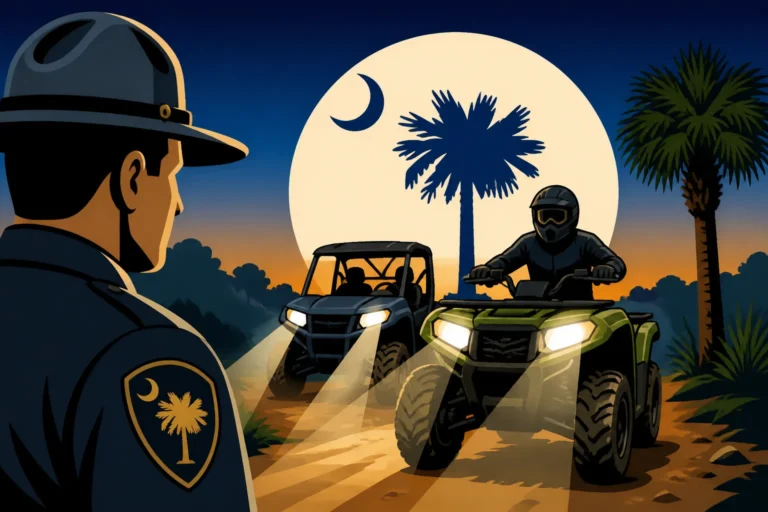
South Carolina Rules for Carrying a Rifle
Riding your ATV or UTV through the beautiful South Carolina Lowcountry or up in the mountains of the Upstate is an incredible experience, but it also comes with a lot of questions, especially when you want to carry a rifle. Many of us enjoy the convenience of taking our machine to a deer stand or just having a firearm with us for protection, but the laws can feel like a tangled web of confusion. This guide is here to untangle those rules, breaking down what you need to know about legally and safely carrying a rifle on your off-road vehicle in the Palmetto State.
Understanding South Carolina's General Firearm Laws for Off-Roaders
First things first, it's crucial to understand that South Carolina's general firearm laws apply whether you're in your pickup truck or on your ATV. There isn't a separate set of laws just for off-road vehicles when it comes to possessing a firearm, but how you carry it and where you are riding are two entirely different matters that can change everything. The state generally permits open carry of long guns (rifles and shotguns) and concealed carry of handguns with a CWP, but the context of your ATV ride significantly impacts these rules.
Think about it: riding through a private field you own is very different from traversing a public trail in a national forest, or even just a dirt road that's open to the public. Each of these scenarios comes with its own layer of regulations, and it's easy to accidentally cross a line if you're not fully informed. We often take for granted what's allowed in our own backyard, but once you venture onto someone else's property or public land, the rules tighten up considerably.
For many riders, the primary reason for carrying a rifle is hunting. South Carolina has a rich hunting tradition, and ATVs and UTVs are indispensable tools for accessing remote areas. However, the convenience of these machines often leads to questions about how to legally transport your hunting rifle. Is it loaded? Is it cased? Does it matter if you're actively hunting or just heading to camp? These are the kinds of specific questions we need to address to keep you on the right side of the law.
Carrying on Private Land: Your Property, Your Rules (Mostly)
When you're riding on your own private property, or land where you have explicit permission from the landowner, the rules regarding carrying a rifle on your ATV or UTV are generally the most lenient. In these situations, the primary concern shifts from strict public land regulations to personal safety and landowner agreements. This is where most of us feel the most comfortable, often just slinging a rifle over a shoulder or laying it across the cargo rack.
However, even on private land, there are still some important considerations. For instance, if you're carrying a loaded rifle, always be mindful of where the muzzle is pointed, especially when navigating uneven terrain or loading/unloading gear. It’s also wise to consider how a firearm is secured to prevent it from bouncing off or getting damaged during a bumpy ride. While the law might not dictate a specific carrying method on private land, common sense and safety certainly do. Many riders use specialized racks or scabbards designed for ATVs and UTVs, which not only protect the firearm but also keep it securely in place. Brands like SuperATV offer robust mounting solutions that can make carrying your rifle a non-issue.
If you're using your ATV for hunting on private land, remember that all South Carolina hunting regulations still apply – season dates, bag limits, and specific weapon requirements for different game. Your ATV or UTV might get you to your stand, but it doesn't exempt you from these fundamental hunting laws. Furthermore, if you’re riding on a hunting lease or land owned by someone else, make sure you understand any specific rules they might have about firearms on their property. Some landowners or hunting clubs might have stricter policies than state law, and you’ll want to respect those to maintain your access. [South Carolina Hunting and Trapping Exemptions] can provide more context on when ATVs are allowed for these activities.
Public Lands: National Forests and Wildlife Management Areas
This is where the rules become significantly more complex and demand your close attention. South Carolina has beautiful national forests and numerous Wildlife Management Areas (WMAs) where ATVs and UTVs are permitted on designated trails. However, carrying firearms on these public lands, especially loaded firearms or those not securely cased, is often highly restricted, if not outright prohibited in certain circumstances.
National Forests (e.g., Sumter and Francis Marion)
In South Carolina's National Forests, like the Sumter and Francis Marion National Forests, federal regulations often come into play alongside state laws. Generally, rifles and shotguns must be unloaded and cased when being transported on an ATV or UTV, especially if you are not actively engaged in legal hunting. "Cased" usually means fully enclosed in a soft or hard case that completely covers the firearm, making it inaccessible for immediate use. [South Carolina National Forest OHV Passes] are required for riding in these areas, and rangers will enforce all regulations, including those related to firearms.
The intent here is to prevent accidental discharge and to distinguish between someone legally hunting and someone simply carrying a firearm in a way that could be perceived as a threat or unlawful. If you are hunting in a national forest, you must adhere to all federal and state hunting regulations, including carrying your hunting license and any necessary permits. Even then, the firearm often needs to be unloaded while actively transporting it on your machine, only loading it once you've reached your designated hunting spot and dismounted. This distinction is critical and often misunderstood.
Wildlife Management Areas (WMAs)
Wildlife Management Areas, overseen by the South Carolina Department of Natural Resources (SCDNR), typically have the strictest rules. Many WMAs outright prohibit the carrying of loaded firearms on vehicles, including ATVs and UTVs, unless specifically authorized for a particular hunting season or activity. Even unloaded firearms might need to be cased, and sometimes even separated from ammunition. [South Carolina WMA Regulations for Vehicles] are quite detailed, and it is your responsibility to know the specific rules for the WMA you plan to visit.
The reason for these stringent rules in WMAs is multifaceted: managing wildlife populations, ensuring public safety, and preventing poaching. These areas are actively managed habitats, and uncontrolled firearm use could have severe consequences. Always check the specific WMA regulations before you go. These can often be found on the SCDNR website or posted at WMA entrances. Don't assume that what's allowed in one WMA is allowed in another; rules can vary.
Here's a quick comparison of general guidelines for carrying rifles on different types of land:
| Land Type | Firearm Condition (General) | Casing Requirement (General) | Loaded Status (General) | Key Considerations |
|---|---|---|---|---|
| Private Land | Legal to possess if allowed by landowner. | Generally not legally required, but highly recommended for safety/protection. | State open/concealed carry laws apply. | Always respect landowner rules; prioritize safety, secure transport; hunting laws apply if actively hunting. [South Carolina Private Property Exemptions] for riding rules. |
| National Forests | Legal to possess, but restricted on OHV. | Generally required (fully enclosed case). | Must be unloaded while transporting on OHV. | Federal and state hunting laws apply. Consult specific forest regulations. Active hunting may allow loaded, but not on the machine. [South Carolina Code Title 50 Chapter 26] for state law. |
| Wildlife Management Areas (WMAs) | Highly restricted; often only during specific seasons. | Often required; sometimes ammunition separation needed. | Usually prohibited loaded on OHV. | Strictly check specific WMA rules before visiting. Can vary widely by WMA and season. Heavily enforced by SCDNR. [The Hunting Exemption in South Carolina's ATV Act] often has WMA caveats. |
Practical Advice for Safe and Legal Transport
Beyond knowing the legalities, ensuring safe transport of your rifle on your ATV or UTV is paramount. An unsecured rifle can become a projectile in an accident, get damaged, or even fall off, posing a danger to you and others. Investing in the right equipment isn't just a luxury; it's a critical safety measure.
Choosing the Right Carrying Method
For ATVs, dedicated gun scabbards or racks are the gold standard. These are designed to securely hold a rifle, often in a position that keeps it protected from mud, dust, and impacts. Many mount to the front or rear racks, keeping the firearm out of your way while riding. You’ll find options that are hard-cased for maximum protection or soft-sided for lighter weight and easier access. Companies like SuperATV offer a range of universal and machine-specific mounts that can adapt to various rifle types and ATV models. They consider things like quick access, protection from elements, and secure attachment, which is really what you need when you're bouncing down a trail or [South Carolina Rules for Riding a Farm Road].
For UTVs, you have even more options, including overhead racks, in-cab mounts, or bed-mounted scabbards. The enclosed nature of many UTV cabs offers a bit more protection from the elements, but securing the rifle properly is still key. You want to ensure it doesn't rattle around, obstruct your view, or become a hazard during sudden stops or turns. Consider how easily you can access the rifle if needed (while dismounted and legally able to load it) and how quickly it can be secured when you're done.
Securing and Handling Your Rifle
- Always Unload: Unless you are actively hunting in a location where a loaded firearm is permitted (and even then, usually only when dismounted), your rifle should be unloaded when being transported on your ATV or UTV, especially on public lands. This means no rounds in the chamber or magazine, and the safety should be engaged.
- Case It Up: On public land, a case is often legally required. Even on private land, a good case protects your valuable rifle from bumps, scrapes, and the elements. A padded case will absorb vibrations and impacts, preserving your scope and finish.
- Muzzle Direction: Pay attention to the direction of the muzzle, even when unloaded and cased. Always orient it in a safe direction, away from yourself, passengers, or the machine's engine components.
- Visibility: When riding through brush or dense woods, ensure your rifle and its case aren't snagging on branches or getting caught on obstacles. This can damage the firearm or even cause an accident.
- Personal Gear: Don't forget your personal safety gear. While [South Carolina Equipment Requirements for ATVs] mainly focus on machine components, always wear a helmet, eye protection, and appropriate riding attire, especially if you're carrying a heavy load like a rifle.
Avoiding Common Pitfalls and Misunderstandings
It's easy to make assumptions or overlook details, especially when dealing with something as important as firearm laws. However, a small oversight can lead to serious consequences, from fines to loss of hunting privileges or even criminal charges. Let's touch on some common misunderstandings and how to avoid them.
"I Have a CWP, So I Can Carry Anything, Anywhere."
This is a dangerous misconception. A Concealed Weapon Permit (CWP) in South Carolina primarily pertains to handguns and dictates how you can carry them concealed. It does not automatically grant you permission to carry loaded rifles on an ATV in restricted areas or override federal or WMA regulations. While your CWP might allow you to carry a concealed handgun on your person while riding (assuming you're otherwise legally allowed to ride where you are), it doesn't extend to openly carried or vehicle-mounted rifles on public land where those are prohibited. Always remember to separate handgun carry laws from long gun transport rules on specific vehicle types and locations.
"If I'm Hunting, the Rules Don't Apply."
While hunting often comes with specific exemptions for firearm possession, these exemptions typically relate to the act of hunting itself, not necessarily the transport of firearms on vehicles. As discussed, many public land rules require firearms to be unloaded and cased during transport, even during hunting season. The hunting exemption generally means you can possess a loaded hunting weapon while actively hunting in a legal manner, not that you can drive your ATV with a loaded, uncased rifle to and from your stand across public access trails. This is a critical distinction that can get you in trouble if misunderstood. This applies to the [Papers for a Quad Kept at Deer Camp] as well; what you can carry at camp might differ from what you can carry to camp on your quad.
"No One Will Ever Check Me."
This is a gamble you don't want to take. SCDNR officers, Forest Service rangers, and local law enforcement are authorized to conduct checks, especially in areas known for hunting or off-road vehicle activity. They are diligent about enforcing regulations, not just for firearms but also for proper registration, safety equipment, and adherence to trail rules. An officer stopping you for a routine check, or even after a complaint, could quickly escalate if you're found in violation of firearm transport laws. Ignorance of the law is never a defense.
To stay clear of these pitfalls, make it a habit to:
- Research Specific Locations: Before every trip, especially to public lands, check the most current regulations for that specific area. Websites for SCDNR, the Forest Service, or local county ordinances are your best resources.
- Err on the Side of Caution: If you're unsure, choose the safest and most restrictive method: unload and fully case your rifle.
- Ask Questions: If regulations are unclear, contact the managing agency (SCDNR, Forest Service) directly for clarification. They are there to help you understand the rules.
- Stay Updated: Laws and regulations can change, so a quick check before each season or major trip is always a good idea. This is especially true with new legislation, such as [South Carolina Street UTV Rules From November 2026], which introduced new vehicle classes and therefore new considerations for firearm transport on roads.
By taking these steps, you can ensure your time on the trails is both enjoyable and fully compliant with South Carolina's regulations, allowing you to focus on the thrill of the ride or the peace of the hunt.
Disclaimer
This article is for general informational purposes only and does not constitute professional advice. Laws, prices and regulations vary by location and change over time. Consult a qualified professional for guidance on your specific situation.