Photographing the VIN Before You Hand Over Cash
Buying a used ATV or UTV in South Carolina can feel like navigating a maze, especially when you're trying to make sure you're getting a legitimate machine and not someone else's headache. One of the biggest fears for any buyer is unknowingly purchasing a stolen vehicle or one with a hidden past. This guide will walk you through a crucial step you should always take before handing over any cash: photographing the Vehicle Identification Number (VIN). It's a simple act that can save you a mountain of grief.
Why Photographing the VIN is Your First Line of Defense
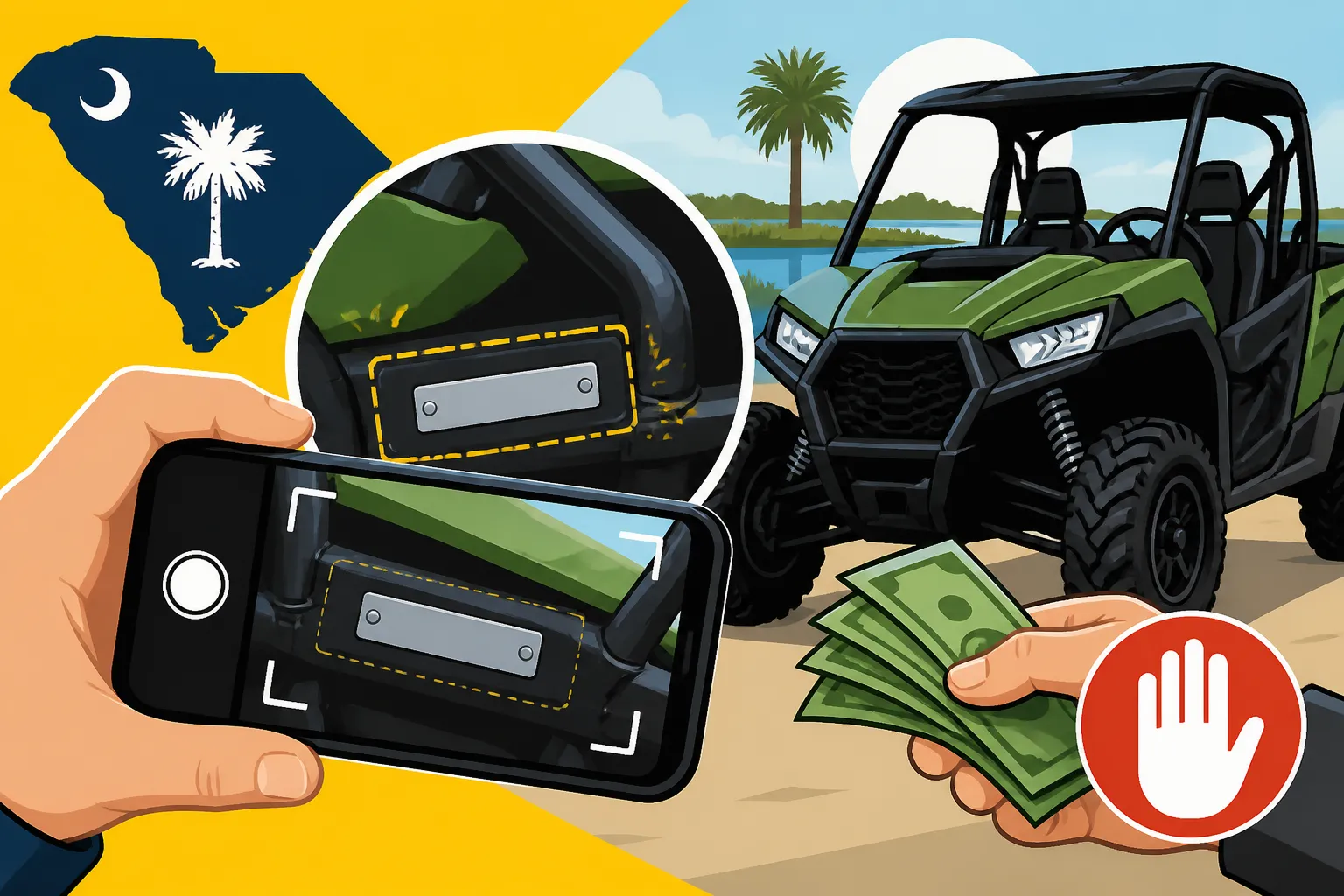
When you’re standing there, looking at a shiny (or sometimes not-so-shiny) quad or side-by-side, it’s easy to get caught up in the excitement. You’re picturing yourself on the trails, maybe out hunting, or just enjoying your land. But before those daydreams take over, you absolutely must focus on the hard facts of the machine. The VIN is the machine's fingerprint, its unique identifier, and getting a clear photograph of it before money changes hands is a non-negotiable step in safeguarding your purchase. It’s about building a digital paper trail for your own protection.
Verifying Ownership and Legitimacy
Imagine you're meeting a seller in a rural area, maybe at a gas station or a big box store parking lot. They seem friendly, the machine looks good, and the price is right. You might feel a little awkward asking to take photos, but trust me, it’s worth it. A clear photo of the VIN allows you to verify that the person claiming to be the owner actually is the owner, or at least has legal possession. You can compare the VIN on the machine to any title or registration documents they present. If the VINs don't match, or if the seller is hesitant for you to take a photo, those are immediate, glaring red flags that should send you walking away. It's about empowering yourself with information before you're emotionally invested or financially committed.
Beyond just comparing numbers, having the VIN allows you to perform independent checks. You can inquire with the South Carolina Department of Motor Vehicles (SCDMV) or even use online services to see if the VIN corresponds to a legitimate vehicle record. This simple verification step helps to prevent scams where sellers might be trying to offload machines with altered VINs or those that have never been properly titled. In South Carolina, while titling for off-road ATVs is optional, it's still highly recommended, and a clean title is a strong indicator of legitimate ownership. [South Carolina Titles Are Optional] but they certainly make your life easier when buying or selling.
Protecting Against Theft and Fraud
This is where photographing the VIN truly shines as a protective measure. Unscrupulous individuals sometimes try to sell stolen ATVs and UTVs. By getting that VIN photo, you have the crucial data needed to check if the machine has been reported stolen. There are national databases and even local law enforcement resources that can perform a quick VIN check. This isn't just about protecting your money; it's about protecting yourself from legal trouble. Buying a stolen vehicle, even unknowingly, can lead to the machine being confiscated without any compensation to you, and potentially even legal hassles.
Think about the sheer frustration of investing your hard-earned cash into a machine, only to have it impounded a few weeks later because it turns out it was reported stolen from across the state. That's a scenario no one wants to face. Furthermore, a VIN check can sometimes reveal other forms of fraud, such as a salvaged title that hasn't been disclosed, or a machine that's been pieced together from multiple wrecked units. While South Carolina may not require titles for all off-road machines, a VIN still tells a story, and you want to ensure that story isn't one of theft or deceit. [How to Check Whether a Quad Was Stolen] is a skill every buyer should master, and it starts with that VIN.
Documenting the Machine's Identity
Even if everything checks out and the seller is legitimate, a clear photo of the VIN serves as an invaluable record for your own files. Should you proceed with the purchase, this photo becomes part of your ownership documentation. If, down the line, you ever need to perform maintenance, order parts, or even make an insurance claim, having that VIN readily accessible without having to crawl under the machine is incredibly convenient. It’s also crucial if you ever decide to sell the machine yourself. You’ll have definitive proof of the VIN for your next buyer, making their due diligence easier and your machine more marketable.
Consider a scenario where the physical VIN plate gets damaged or obscured over time due to trail riding, weather, or an accident. Having a high-quality photo from the day of purchase provides a permanent, verifiable record of the machine's identity. This documentation can be a lifesaver when dealing with the SCDMV for a title application or when you need to prove ownership for a [South Carolina Title After the Owner Dies] or a [South Carolina Title With Two Owners]. It’s a small, quick step that provides significant long-term peace of mind and simplifies future administrative tasks.
The Step-by-Step Process of Photographing the VIN
Taking a good VIN photo isn't rocket science, but there are a few best practices to ensure you get the information you need clearly and reliably. This isn't just a casual snapshot; it's a piece of critical evidence that could protect your investment. Approach it with the same care you would if you were documenting damage for an insurance claim.
Locating the VIN on Your ATV or UTV
The VIN is almost always stamped directly onto the frame of the machine. Unlike cars, where it's often visible through the windshield, on ATVs and UTVs, you'll likely need to do a bit of looking.
- ATVs (Quads): On most ATVs, look on the lower-front frame, usually near the left front wheel, or along the frame rail under the seat. Sometimes it's near the footpeg on the left side. It might be covered in mud or dirt, so be prepared to wipe it clean.
- UTVs (Side-by-Sides): For UTVs, common locations include the frame rail under the driver's seat, on the frame near one of the front wheels, or sometimes even on the firewall behind the seats. Again, a little cleaning might be necessary to reveal the numbers clearly.
- Dirt Bikes: If you're looking at a dirt bike, the VIN is almost always stamped on the steering head tube, which is the part of the frame where the front forks attach.
Don't be shy about asking the seller to point it out if you can't find it immediately. A legitimate seller will have no issue showing you where it is. If they seem hesitant or try to obscure the location, that's another sign to be wary.
Getting a Clear, Readable Photo
Once you've located the VIN, the goal is to get several crystal-clear photos that leave no doubt about the characters.
- Clean the Area: Use a rag or even your finger to wipe away any dirt, mud, or grime covering the VIN. Every character needs to be perfectly visible.
- Good Lighting: Natural daylight is usually best. Position yourself so there aren't harsh shadows obscuring the numbers. If it's dim, use your phone's flashlight feature to illuminate the VIN directly.
- Focus: Tap on the VIN characters on your phone screen to ensure your camera focuses sharply. Blurry photos are useless.
- Multiple Angles: Take several photos: a close-up shot of just the VIN, a slightly wider shot that includes some of the surrounding frame (to show context and prove it's the actual machine), and maybe even a video slowly panning across the VIN. More data is always better than less.
- Check Immediately: Review the photos right away. Zoom in and make sure every single character is perfectly legible. If there's any doubt, retake the photos until they are clear. You don't want to get home only to find your crucial photo is unreadable.
Remember, this isn't just for your memory; it's for verification. Treat this photo as if it's going to be evidence in a legal dispute, because in the worst-case scenario, it just might be.
What to Do with the VIN Once You Have It
Once you have those clear, undeniable photos of the VIN, your detective work truly begins. This isn't just a keepsake; it's a tool.
First, write down the VIN exactly as it appears in your photos. Double-check every character. It’s easy to mix up an 'S' and a '5', or an 'I' and a '1'. Accuracy here is paramount.
Next, you'll want to use this VIN for a background check. There are several services, both free and paid, that allow you to check for stolen vehicles. Many state DMVs offer a basic VIN check tool, and there are national databases for stolen vehicles that law enforcement can access. You can also use services that provide more comprehensive vehicle history reports, similar to what you'd get for a car, which might include accident history or reported damage.
When it comes to completing the purchase, having the VIN on hand is crucial for creating a robust bill of sale. A good bill of sale should clearly list the VIN, ensuring there's no ambiguity about which specific machine you're purchasing. Services like LawDepot offer excellent templates for bills of sale that include all the necessary fields, including a prominent spot for the VIN. This helps to create a legally sound transaction, protecting both buyer and seller. A well-crafted bill of sale, especially one from a reputable template provider like LawDepot, offers a clear record of the transaction.
Essential Checks to Perform with a Photographed VIN
Having the VIN photo in hand is just the beginning. The real value comes from the checks you perform with it. This is your opportunity to uncover any hidden problems before you commit your cash. Don't skip these steps; they are critical for a safe transaction.
Running a Stolen Vehicle Check
This is arguably the most important check you can perform. There are a few ways to go about it:
- Local Law Enforcement: You can call your local police department or sheriff's office and ask if they can run the VIN for you. Explain that you're looking to purchase a used ATV/UTV and want to ensure it's not stolen. They may be able to check national databases like the National Crime Information Center (NCIC).
- State DMV/Highway Patrol: Some state Department of Motor Vehicles or Highway Patrol websites offer VIN check tools for theft. While South Carolina may not require registration for all off-road ATVs, the VIN is still tied to a vehicle's history, and a theft report would usually be flagged.
- Online VIN Check Services: There are numerous online services, some free and some paid, that can perform VIN checks. Exercise caution and choose reputable ones. They can often tap into broader databases, giving you a more comprehensive picture. Be wary of sites that ask for too much personal information or charge exorbitant fees for basic theft checks.
If the VIN comes back as stolen, do not proceed with the purchase. Immediately inform law enforcement, providing them with all the details you have about the seller and the machine. You've just saved yourself from a huge legal and financial headache.
Cross-Referencing with Seller's Documentation
Once you've verified the VIN isn't stolen, your next step is to compare your photographed VIN against any paperwork the seller provides. This typically includes:
- Title: If the seller has a title for the machine (which is highly recommended for off-road machines in South Carolina, even if optional), ensure the VIN on the title matches your photo exactly. Any discrepancy, even a single character, is a major red flag. This is especially true for machines like UTVs, where [Titling a Side-by-Side in South Carolina] is becoming more common.
- Original Manufacturer's Certificate of Origin (MCO): For newer machines or those that haven't been titled yet, the MCO is the primary proof of ownership. Ensure the VIN on the MCO matches. [South Carolina Requires an MCO for a New Machine] to get a first title.
- Bill of Sale: If the seller is providing their own bill of sale from when they bought the machine, cross-reference that VIN as well.
- Registration Card: For street-legal UTVs, there will be a registration card. Make sure the VIN on it matches. [South Carolina Street-Legal UTV Registration Arrives] with specific paperwork requirements.
This cross-referencing helps confirm that the paperwork belongs to this specific machine and not another one. It also validates the seller's claim of ownership. If the VINs don't align, or if the seller offers flimsy excuses, consider it a deal-breaker. A legitimate seller will have clean, matching paperwork. For help with creating a new bill of sale for your transaction, templates from LawDepot are an excellent resource for ensuring all critical information, including the VIN, is accurately captured.
Identifying Potential Red Flags
Beyond direct theft, a VIN check and careful comparison can reveal other issues. Here's what to look for:
- Altered or Tampered VIN: Carefully inspect the physical VIN on the machine. Does it look like it's been scratched, ground down, re-stamped, or have any signs of alteration? This is a major felony and an immediate reason to walk away.
- Missing or Obscured VIN: If the VIN plate is missing entirely, or so heavily damaged that it's unreadable, it's a huge problem. You won't be able to title the machine, insure it, or prove ownership. [South Carolina Title When the Serial Is Gone] is a situation you definitely want to avoid.
- Discrepancies in History Reports: If you run a comprehensive history report, look for inconsistencies. Does the reported mileage or hours align with the machine's condition? Are there any undeclared accidents or salvage titles?
- Seller's Reluctance: Any hesitation from the seller to let you photograph the VIN, clean it, or perform checks should raise alarms. An honest seller has nothing to hide.
- Unusually Low Price: While a good deal is great, a price that seems too good to be true often is. Coupled with VIN issues, a rock-bottom price can indicate a stolen or problematic machine.
These red flags are not just suggestions; they are serious warnings. Ignoring them could lead to significant financial loss and legal trouble. Always err on the side of caution.
Beyond the VIN Photo: Other Safeguards for Your Purchase
While photographing and checking the VIN is paramount, it's just one piece of the puzzle when buying a used ATV or UTV. A smart buyer takes several other precautions to ensure a smooth, legitimate transaction and protect their investment.
The Importance of a Solid Bill of Sale
A verbal agreement or a simple handwritten note just won't cut it when you're making a significant purchase. You need a comprehensive bill of sale. This document is your proof of purchase, details the terms of the sale, and officially transfers ownership from the seller to you. It should include:
- Seller and Buyer Information: Full legal names, addresses, and contact information for both parties.
- Machine Details: Make, model, year, color, and most importantly, the full VIN. Also include odometer readings or hour meter readings if applicable.
- Purchase Price: The exact amount paid for the machine.
- Date of Sale: The date the transaction took place.
- Signatures: Both the seller and buyer must sign and date the document.
- "As-Is" Clause: Most private sales are "as-is," meaning you buy the machine in its current condition with no warranties. Make sure this is explicitly stated.
A well-drafted bill of sale is crucial for future reference, for tax purposes (if applicable), and especially if you ever need to prove ownership to the SCDMV, particularly if the machine doesn't have a title. It provides a clear, legally binding record. You can find excellent, customizable bill of sale templates from reputable online legal resources like LawDepot, which ensure you cover all your bases and don't miss any critical details. These templates make the process simple and ensure you have a robust legal document.
Meeting the Seller and Inspecting the Machine
Where and how you meet the seller, along with a thorough physical inspection, are equally as important as the VIN check.
- Safe Meeting Location: Always choose a public, well-lit location, preferably during daylight hours. A police station parking lot, a busy shopping center, or a bank parking lot with surveillance cameras are ideal. Avoid meeting at secluded locations or at the seller's home if you're uncomfortable.
- Bring a Companion: Never go alone. Bring a friend or family member for safety and to serve as an extra set of eyes during the inspection.
- Thorough Physical Inspection: Don't just kick the tires. Start the machine (cold), listen for unusual noises, check the lights, brakes, and engage all gears. Look for leaks, excessive rust, worn tires, damaged suspension components, and any signs of major repairs or neglect. Ask to ride it, or have the seller demonstrate it on varied terrain if possible.
- Check Fluids: Look at the oil, coolant, and brake fluid. Clean fluids indicate good maintenance; dirty, low, or milky fluids suggest neglect or potential problems.
- Test Drive: If possible, take it for a short test drive. Pay attention to how it handles, shifts, and brakes. This is your chance to uncover mechanical issues that aren't visible.
- Ask Questions: Don't be afraid to ask about the machine's history, maintenance records, why the seller is selling, and any known issues. A forthright seller will answer honestly.
Taking these steps ensures you're not just buying a machine with a clean VIN, but also one that's mechanically sound and hasn't been abused. [Buying From a Private Seller in South Carolina] can be a fantastic way to find a deal, but it demands caution and diligence.
Understanding South Carolina's Titling and Registration Nuances
South Carolina has some specific rules for ATVs and UTVs that you, as a buyer, need to be aware of. While many off-road ATVs aren't required to be titled, it’s still highly beneficial. A title provides indisputable proof of ownership and makes future sales much easier. [Why a Buyer Wants a Title in Hand] is a question with a clear answer: security and ease of transfer. If the machine does have a title, you'll need it to transfer ownership.
For street-legal UTVs, the rules are different. These machines do require titling and registration with the SCDMV. When [South Carolina Street-Legal UTV Registration Arrives], it brings with it requirements for insurance and a biennial fee. If you're buying a street-legal UTV, ensure all these documents are in order.
Knowing these nuances allows you to ask the right questions and ensure you're getting all the necessary paperwork. If a seller is trying to sell a machine without a title (and it should have one), or if they claim it's street-legal but lack the proper registration, these are serious concerns. Even for off-road machines, while [South Carolina Machines With No Paperwork] can be a legitimate private sale, having a clear paper trail, including the bill of sale created with a tool like LawDepot, is always your best protection. A clear VIN, a solid bill of sale, and an understanding of South Carolina's specific regulations will set you up for a happy, hassle-free ownership experience.
| Safeguard Step | Description | Why It's Important |
|---|---|---|
| Photograph the VIN | Take clear, multiple photos of the VIN stamped on the machine's frame. | Verifies identity, enables checks for theft/fraud, provides personal record. |
| Run a Stolen Check | Use the VIN to check state and national databases for theft reports. | Prevents unknowingly buying a stolen machine, avoids legal complications. |
| Cross-Reference Paperwork | Compare VIN from photos to title, MCO, or previous bill of sale. | Ensures paperwork matches the physical machine, confirms legitimate ownership. |
| Get a Solid Bill of Sale | Use a detailed, written agreement for the transaction (e.g., from LawDepot). | Legal proof of purchase, outlines sale terms, establishes clear ownership transfer. |
| Inspect Machine Physically | Thoroughly check mechanical condition, look for damage, and test drive. | Uncovers hidden mechanical issues, ensures machine is safe and worth the price. |
| Meet Safely | Choose a public, well-lit location and bring a companion. | Personal safety, deters fraudulent sellers, provides objective witness. |
Disclaimer
This article is for general informational purposes only and does not constitute professional advice. Laws, prices and regulations vary by location and change over time. Consult a qualified professional for guidance on your specific situation.