Titling a New Quad With Its Origin Certificate
There’s nothing quite like the thrill of bringing a brand-new quad home to the Palmetto State. The shine of the new plastics, the fresh engine smell, the promise of countless adventures on trails or around your property. But let's be honest, that initial excitement can sometimes be tempered by a looming question mark over the paperwork. You know you need to get it titled, but what exactly does that entail when you're the first owner, and you have that official Manufacturer's Certificate of Origin in hand? This guide is here to strip away the mystery, walking you through the straightforward process of titling your shiny new quad in South Carolina, ensuring you're ready to hit the dirt with peace of mind.
Understanding the Manufacturer's Certificate of Origin (MCO)
Think of the Manufacturer's Certificate of Origin, or MCO, as your quad's birth certificate. It's the very first official document that establishes the machine's existence and identifies its unique characteristics. Without this crucial piece of paper, you simply cannot title a new ATV in South Carolina. It’s the foundational document that proves your quad is legitimately new, has never been titled before, and is ready for its first official owner – you!
What an MCO Contains
Your MCO will come packed with vital information about your new machine. This includes the manufacturer's name, the vehicle identification number (VIN), the make, model, year, and engine size. You'll also see details about the weight and sometimes even the class of the vehicle. All of this information is meticulously recorded by the manufacturer and is essential for the state to properly identify and record your ATV when you go to title it. It's truly the definitive record for your machine's identity right out of the factory.
This document also verifies that the machine meets federal safety and emission standards applicable at the time of its manufacture. While South Carolina focuses on the ownership aspect for titling, the MCO is a universally recognized document in the powersports industry. It’s what distinguishes a new machine from a used one, which would typically come with a previously assigned title or a bill of sale. So, when you pick up your new quad from the dealer, double-check that this document is included in your paperwork packet.
Why the MCO is Essential for Titling New Quads
For a new ATV in South Carolina, the MCO is absolutely non-negotiable for obtaining a title. It serves as irrefutable proof of the machine's origin and that it hasn't been titled in another state or by a previous owner. Without it, the Department of Motor Vehicles (DMV) has no way to verify the machine's new status or who its first rightful owner should be. This protects both you and the state from potential fraud or stolen machines trying to get a clean title.
The DMV will specifically look for this document to begin the titling process for any brand-new machine. It bypasses the need for previous owner information, something that would be required for a used ATV. Essentially, the MCO kickstarts the ownership chain, allowing the state to issue the very first certificate of title for that specific VIN. This is why when you hear about [South Carolina Requires an MCO for a New Machine], it's not just a suggestion – it's a hard requirement.
The South Carolina ATV Titling Process for New Machines
Alright, you've got your brand-new quad, and that all-important MCO is safely in hand. Now it's time to make it officially yours with a South Carolina title. While the process can sometimes feel daunting, especially if you're not used to dealing with state vehicle departments, it's actually quite streamlined for new machines. The key is to arrive prepared with all your documents in order.
Gathering Your Required Documents
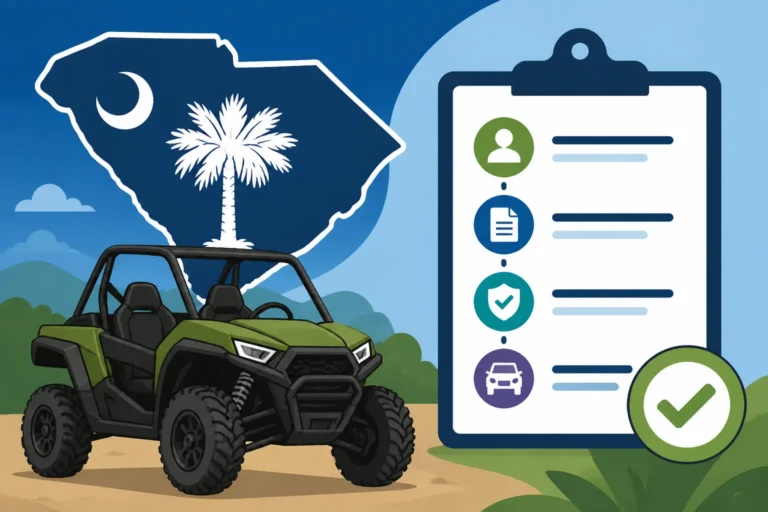
Before you even think about heading to the DMV, make sure you have everything you need. This preparation will save you immense frustration and potentially multiple trips. You'll need:
- The Manufacturer's Certificate of Origin (MCO): As discussed, this is paramount. Ensure it's the original document, not a copy.
- A Bill of Sale: This document will come from the dealer where you purchased your new quad. It details the purchase price, dealer information, and your information as the buyer. Make sure it's signed by both you and the dealer.
- Your Valid Photo ID: A South Carolina driver's license or state-issued ID card is standard.
- Proof of South Carolina Residency: This could be your driver's license if it has your current address, or a utility bill, voter registration card, or tax document.
- Completed Title Application (Form 400): You can often download this form online from the South Carolina DMV website or pick one up at any DMV branch. It's officially called "Application for Certificate of Title and Registration."
- Payment for Fees: Be prepared for the applicable title fee. While prices can change, it's usually a modest amount.
While most reputable dealers will provide a thorough bill of sale and handle some of the initial legwork, it's always wise to ensure you have a comprehensive understanding of your purchase. If you ever want to create additional personal legal documents, like a more detailed purchase agreement for your records or a robust bill of sale for a future private sale, platforms like LawDepot can offer templates to help you draft these kinds of important papers.
Step-by-Step at the DMV
Once you've gathered all your documents, it's time to visit your local South Carolina DMV office. Here's a general outline of what to expect:
-
Fill Out the Application Form: If you didn't print and fill out Form 400 beforehand, you can do so at the DMV. This form is versatile; it handles title-only, registration-only, or both. For a new quad, you'll be primarily focused on the titling aspect, though you might consider registration if it's a street-legal UTV (which is a separate process altogether for ATVs). The form is straightforward, asking for vehicle details from your MCO and your personal information. If you're wondering about the specifics, checking out guides like [One DMV Form Handles Title, Registration or Both] can be really helpful.
-
Submit Your Documents: Present your completed Form 400, your original MCO, the dealer's bill of sale, your ID, and proof of residency to the clerk. They will review everything to ensure all fields are filled out correctly and that the VIN on your MCO matches the application. Any discrepancies here can cause delays.
-
Pay the Fees: You'll need to pay the required title fee. This fee is usually quite small, especially compared to the cost of the machine itself. For specific figures, always check the current rates on the DMV website or by calling ahead, as they can shift over time. Keep in mind that there might be an option for an expedited service if you need your title faster, which would involve an additional fee. Understanding [What a South Carolina ATV Title Costs] can help you budget appropriately.
-
Receive Your Title (or a Temporary Document): In most cases, if everything is in order, the DMV will process your application. You might receive a temporary operating permit or a receipt, and your official title will be mailed to you within a certain timeframe. The processing time can vary, so don't expect to walk out with the physical title in hand immediately unless you opt for an expedite fee, which can be an additional charge. Learn more about [South Carolina Title Processing Time] to manage your expectations.
Common Hurdles and How to Overcome Them
While the process of titling a new quad in South Carolina with an MCO is generally smooth, sometimes unexpected hiccups can occur. Knowing what these potential issues are and how to address them can save you a lot of stress and repeated trips to the DMV. The key is often clear communication and having your documentation meticulously organized.
MCO Errors or Missing Documents
One of the biggest issues you might face is an MCO with an error, such as a misspelled name, an incorrect address, or a VIN discrepancy. While rare, mistakes can happen. If you notice an error on the MCO itself, you'll need to go back to the dealer who sold you the quad. They are the only ones who can contact the manufacturer to issue a corrected MCO. Do not attempt to alter the MCO yourself, as this could invalidate the document entirely.
Another, perhaps more frustrating, scenario is a missing MCO altogether. This should not happen with a reputable dealer, but if for some reason it's not provided or gets lost before you get to the DMV, you are in a tough spot. Again, your first point of contact is the selling dealer. They should be able to apply for a duplicate MCO from the manufacturer. This process can take time, so it's crucial to address it immediately. Remember, [South Carolina Requires an MCO for a New Machine] means there's no way around this document for a new quad.
Dealer Delays in Paperwork
Sometimes, the delay isn't on your end but with the dealer. They might take longer than expected to provide the MCO or the bill of sale, especially if they are processing a high volume of sales. If you're experiencing delays, first, politely follow up with the dealership. Keep records of your communication. If significant time passes and you're still without your necessary documents, you might need to escalate the issue with the dealership management.
It's always a good practice to confirm the expected timeframe for receiving all your paperwork at the point of sale. Getting a written commitment from the dealer regarding when the MCO and bill of sale will be ready can provide a paper trail if issues arise. This type of due diligence can prevent many headaches down the road, ensuring your experience aligns with [South Carolina Dealer Paperwork at Delivery] expectations.
Verification of VIN
Even with an MCO, the DMV might perform a VIN verification, especially if there's any perceived inconsistency or if their system flags something unusual. This is a routine check to ensure the physical VIN on the quad matches the documents you’ve provided. Most new quads have easily accessible VINs, often stamped on the frame or a prominent label. Ensure your quad is clean and the VIN is visible before heading to the DMV.
If a VIN verification is required and you're at the DMV, they might send an agent out to your vehicle (if it's present in the parking lot) or ask you to bring it back another time. Sometimes, you might be directed to a law enforcement agency or a certified inspector to complete the verification. This is generally a minor hurdle, but it reinforces the importance of the VIN as the unique identifier for your machine.
Why Titling Your New Quad Matters (Even if Optional)
South Carolina offers optional titling for ATVs, which might make some new owners wonder if they really need to bother with the process. While it's true you might not be required to title an off-road ATV solely for private land use, choosing to title your new quad, even when not mandated, provides a significant layer of protection and benefit that can save you a lot of grief in the long run. It's often one of those "better safe than sorry" situations that truly pays off.
Proof of Ownership and Theft Deterrent
The most critical reason to title your new quad is to establish clear, undeniable proof of ownership. Your title is a legal document issued by the state confirming that you are the rightful owner of that specific machine. If your quad is ever stolen, having a title makes it infinitely easier for law enforcement to track it, recover it, and for you to prove it belongs to you. Without a title, proving ownership can become a tangled mess of bills of sale and affidavits, which might not hold as much weight as a state-issued document.
Imagine the nightmare of a stolen quad without a title; it becomes much harder to report it or claim it back if found. This official documentation from the state is a powerful deterrent to theft and a crucial asset in recovery efforts. This is a primary reason why [Why a Buyer Wants a Title in Hand] when purchasing any machine, new or used.
Facilitating Future Sales and Financing
Even if you love your new quad now, there might come a day when you want to sell it or trade up. Trying to sell an untitled ATV, even a newer one, can be a major hurdle. Many potential buyers, especially those who are informed, will be hesitant or outright refuse to purchase a machine without a clear title, even if it's technically optional in South Carolina. They want the assurance of legal ownership just as much as you did when you bought it.
Furthermore, if you ever plan to finance an ATV through a bank or credit union, nearly all lenders will require a title. The title acts as collateral for the loan, allowing the lender to record a lien against the machine. Without a title, securing financing for your quad is virtually impossible. This means a private sale without a title can drastically reduce your machine's resale value and narrow your pool of potential buyers. This is why [Lenders That Will Not Finance an Untitled Quad] is a reality many riders face.
Insurance and Legal Protection
While South Carolina doesn't generally mandate insurance for off-road ATVs, many riders choose to insure their machines to protect against damage, theft, or liability. Often, insurance companies will require a title to issue a comprehensive policy, especially if you're looking for full coverage beyond basic liability. The title confirms the legitimate ownership needed for the insurer to write a policy.
Moreover, having a titled machine can offer a layer of legal protection in various scenarios. Should there be any dispute over ownership, or if you ever need to demonstrate ownership for a legal matter, your state-issued title is the strongest evidence you possess. It provides an undeniable legal record that can simplify complex situations. For more on this, consider the common requirements described in [Insurers That Ask for a Title First].
Here's a quick overview of why titling is a smart move:
| Benefit | Description | Impact of No Title |
|---|---|---|
| Proof of Ownership | State-issued document legally confirms you own the quad. | Difficult to prove ownership, especially in cases of theft or dispute. |
| Theft Recovery | Easier for law enforcement to track and return stolen machines. | Harder to identify and recover if stolen; often no official record to search. |
| Resale Value | Increases buyer confidence and machine value in the used market. | Lowers resale value; many buyers will avoid untitled machines. |
| Financing Eligibility | Essential collateral for securing loans from banks or credit unions. | Nearly impossible to finance through traditional lenders. |
| Insurance Coverage | Often required by insurers for comprehensive and theft policies. | Limits insurance options; may only qualify for basic or no coverage. |
| Legal Standing | Provides clear legal documentation in case of disputes or official inquiries. | Can complicate legal matters related to ownership, inheritance, or property claims. |
| Peace of Mind | Knowing your asset is officially recognized and protected. | Constant worry about ownership legitimacy, especially if paper trail is weak. |
Ultimately, while the option to skip titling exists for off-road ATVs, the benefits of securing a title for your new quad far outweigh the minimal effort and cost involved. It's a small investment in safeguarding your valuable asset and ensuring a smoother experience throughout your ownership journey. Take the time to get it done right, and enjoy your South Carolina adventures with full confidence!
Disclaimer
This article is for general informational purposes only and does not constitute professional advice. Laws, prices and regulations vary by location and change over time. Consult a qualified professional for guidance on your specific situation.