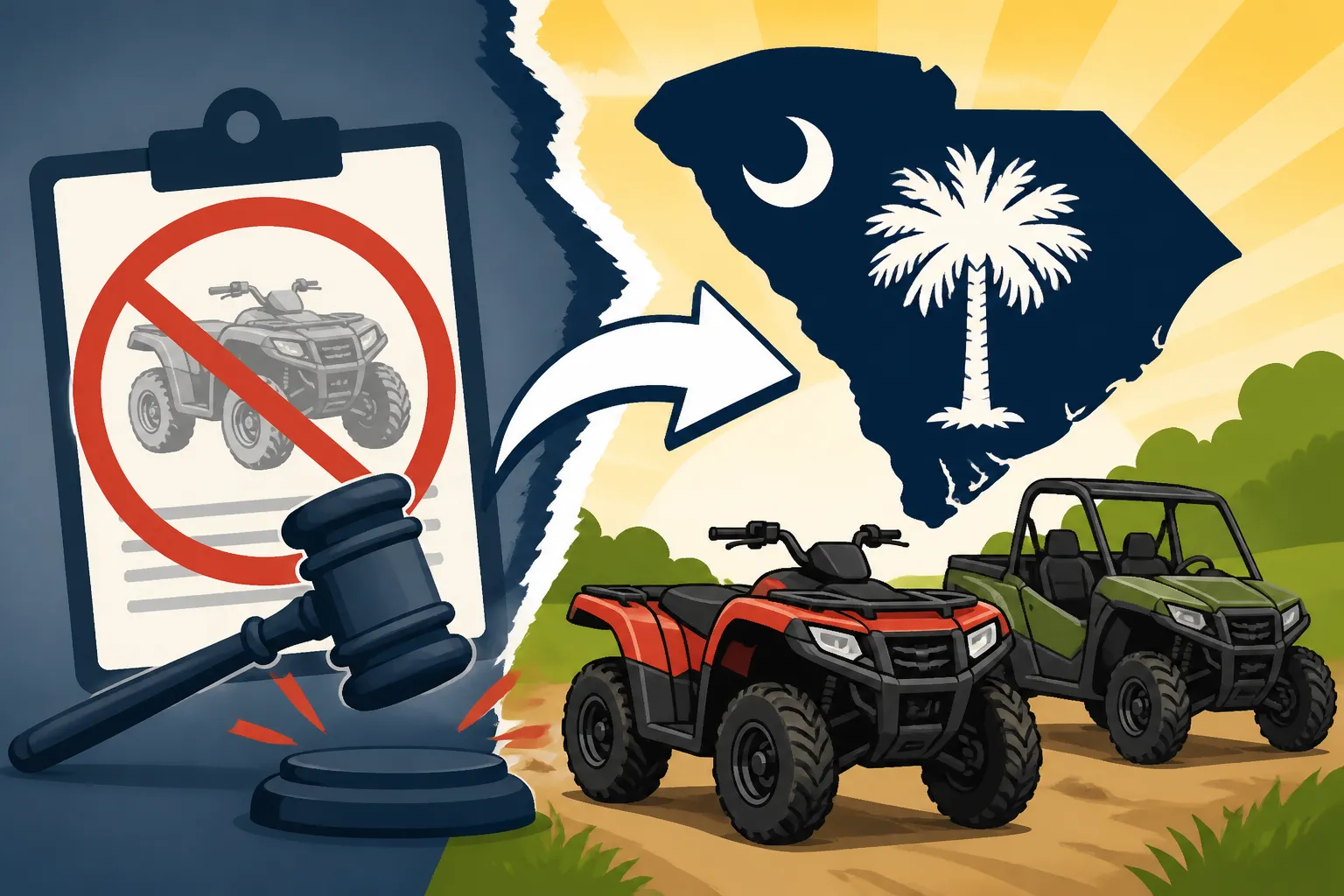
Why South Carolina Stopped Taxing ATVs as Property
One common concern I hear from fellow riders, especially those new to the Palmetto State or those just getting into the ATV and UTV scene, is the worry about annual property taxes. It's a huge relief for many to learn that in South Carolina, you don't actually pay yearly property taxes on your off-road machines anymore. This guide is all about diving into why that's the case and what it means for your wallet and your peace of mind.
The Burden of Annual Property Taxes on Off-Road Vehicles (Before the Change)
Back in the day, owning an ATV or UTV in South Carolina came with a somewhat unwelcome annual surprise: a property tax bill from your county. Just like your car or truck, these off-road machines were considered personal property, and the state, through its local counties, expected its due. For many, it felt like an extra layer of cost that chipped away at the joy of hitting the trails or using their machine around the farm.
This system was often a source of frustration. You'd buy a machine, pay sales tax, and then a few months later, another bill would land in your mailbox. It made budgeting for your riding hobby a bit more complex, and sometimes, the valuation felt arbitrary, leaving owners wondering why their well-loved, slightly older quad was still commanding a hefty tax.
How Property Taxes Used to Work for ATVs
Before the change, if you owned an ATV or UTV, your county auditor's office would assess its value, typically based on its age, make, model, and condition. This assessment would then be used to calculate a property tax bill, which you'd pay annually. This was separate from any sales tax you paid when you purchased the machine, or any titling fees. It was just an ongoing cost of ownership, year after year.
Imagine buying a brand new side-by-side, eager to hit the trails at Carolina Adventure World or Gulches ORV Park. You'd pay a decent chunk in sales tax, maybe a dealer fee, and get your title sorted. Then, a few months down the line, a bill arrives for another few hundred dollars, just for the privilege of owning it for the next year. It definitely added up and was a factor many considered when buying, especially if they were on a tight budget.
The Frustration of Annual Bills and Valuations
The biggest frustration for many owners was the recurring nature of the bill and the often opaque valuation process. You might have bought your ATV several years ago, put plenty of hours on it, and watched its market value depreciate, yet the county's valuation for tax purposes might not always seem to keep pace. This led to a feeling of being nickel-and-dimed for an asset that wasn't generating income for many recreational users.
For farmers and those using machines for utility, it felt like a double hit, as these tools were essential for their work, yet still incurred an additional, ongoing tax. The process could also be confusing, especially if you moved within the state or bought a used machine. Ensuring your address was correct for tax bills, understanding the appeal process for valuations, and simply remembering to budget for yet another annual expense was a hassle many riders would rather do without.
The Legislative Change: South Carolina Act 164 of 2011
Thankfully, that era of annual property tax bills for ATVs and UTVs in South Carolina is a thing of the past! The significant change came with the passing of [South Carolina Act 164 and Street UTVs] in 2011. This act fundamentally altered how off-road vehicles are treated under state tax law, providing a huge relief to owners across the state. It was a move that acknowledged the recreational and utility nature of these machines, separating them from the broader category of personal vehicles that continue to incur annual property taxes.
This legislative shift made South Carolina stand out, offering a more financially friendly environment for ATV and UTV enthusiasts. It simplified the cost of ownership, removing one of the most persistent and often complained-about recurring expenses, letting riders focus more on enjoying their machines and less on budgeting for unexpected bills.
Understanding South Carolina Code Section 50-26-50
The heart of this change lies within [South Carolina Code Section 50-26-50]. This specific statute was amended to exempt certain types of off-road vehicles, including ATVs and UTVs, from ad valorem property taxes. In plain English, "ad valorem" means "according to value," which is precisely how personal property taxes are calculated. By exempting these machines, the state essentially declared that their value would no longer be used as a basis for annual taxation by counties.
This section is critical because it's the legal underpinning for why you no longer receive those county tax bills for your quad or side-by-side. It’s a clear directive that has been in effect [A Statute Passed in 2011], ensuring that this benefit isn't just a temporary measure. Understanding this code helps clarify any confusion you might encounter, especially if you're dealing with older paperwork or talking to someone who remembers the old system.
What the Exemption Means for ATV and UTV Owners
For you, the ATV or UTV owner in South Carolina, this exemption means one less financial worry. You will not receive annual property tax bills for your off-road machine from your county. This applies whether your machine is used purely for recreation, on your farm, or for hunting. The state has essentially removed a significant recurring cost from the total ownership equation.
It's a welcome relief that allows you to put those funds towards other aspects of your riding experience, whether it's maintenance, upgrades, fuel for more trail adventures, or even investing in safety gear. This is why you'll often hear that [South Carolina Exempts ATVs From Property Tax] and [South Carolina Quads Owe No County Property Tax] – it's a direct result of this forward-thinking legislation.
Broader Financial Benefits for Off-Road Enthusiasts
This property tax exemption isn't just a small perk; it has a ripple effect on the overall financial landscape for anyone who loves off-roading in South Carolina. It makes owning an ATV or UTV more accessible and sustainable for many, reducing the long-term financial commitment that can sometimes deter new enthusiasts or make existing owners reconsider their hobby. It's a genuine benefit that sets South Carolina apart as a rider-friendly state.
The absence of this annual tax encourages more people to invest in these machines, knowing that a significant yearly expense has been removed. This can indirectly support local dealerships, accessory shops, and riding parks, contributing to a vibrant off-road community within the state.
How This Impacts Total Cost of Ownership
When you consider the total cost of ownership for an ATV or UTV, you typically factor in the purchase price, sales tax, titling fees, insurance, maintenance, fuel, and any upgrades. Before 2011, annual property taxes were a notable line item that you had to budget for every single year. Removing this burden substantially lowers the long-term financial commitment. Over a machine's lifespan, this can easily add up to thousands of dollars in savings.
Think about it: that money can now go towards a new set of tires, an upgraded winch, or perhaps even a weekend trip to a great riding spot like Parsons Mountain OHV Trail. This exemption helps make the dream of owning a quad or side-by-side a more affordable reality, allowing you to maximize your enjoyment without the sting of a yearly property tax bill.
The Difference Between Property Tax and Sales Tax
It's crucial to understand that while property taxes on ATVs are gone, other taxes and fees still apply. Specifically, you will still pay sales tax when you purchase an ATV or UTV, whether new or used from a dealership. South Carolina has a [South Carolina's Max Tax Cap on ATVs] for vehicles, which helps limit the amount of sales tax you pay on high-value machines, but sales tax itself is still collected at the time of purchase.
| Tax/Fee Type | Description | Applies to ATVs/UTVs? (Current SC Law) |
|---|---|---|
| Sales Tax | One-time tax on the purchase price | YES (with a maximum cap) |
| Property Tax | Annual tax on the assessed value of personal property | NO (exempt since 2011) |
| Title Fee | One-time fee to establish legal ownership | YES (if you choose to title) |
| Registration Fee | Biennial fee for street-legal UTVs | YES (for street-legal UTVs only) |
| Infrastructure Maint. Fee | One-time fee on purchase (replaces vehicle sales tax on some items) | YES (applies to titled vehicles) |
This table clarifies that the property tax exemption is very specific to annual county taxes based on value. You're not entirely off the hook for all taxes, but the most persistent one has been removed. For private sales, while the seller might not charge sales tax, the buyer is generally responsible for paying the [South Carolina Use Tax on a Machine Brought Home] when titling the machine. This is where resources like LawDepot can be handy for creating a proper bill of sale, which clearly documents the sale price and helps you calculate any due use tax accurately, even if the machine isn't being titled immediately.
What This Means for Titling and Registration Decisions
The property tax exemption definitely streamlines one aspect of ATV/UTV ownership, but it doesn't eliminate all other paperwork considerations. In fact, it sometimes leads to questions about why you'd bother with titling or registration if there's no tax incentive. However, titling, in particular, remains a very important step for reasons that go beyond just taxes. And for street-legal UTVs, new registration rules bring their own set of requirements.
Understanding these distinctions is key to being a responsible and well-informed off-road enthusiast in South Carolina. It helps you navigate private sales, insurance, and compliance with the law effectively, ensuring your machine is always properly documented, even without the property tax driving the process.
Optional Titling and Its Relationship to the Exemption
While you don't pay property taxes on your ATV, [South Carolina Titles Are Optional] for off-road vehicles. This means you aren't legally required to title your quad or dirt bike if it's strictly an off-road machine. However, opting not to title can create a host of issues, especially if you ever plan to sell it or need to prove ownership. Without a title, proving you're the rightful owner can be a real headache, making private sales much more difficult.
Many financial institutions won't finance an untitled machine, and some insurance companies might hesitate to cover one without formal proof of ownership. A title, even if optional, is the gold standard for proving who legally owns the machine. It also helps prevent issues with stolen machines and can be crucial if you ever need to make an insurance claim. Even if the immediate financial incentive of avoiding property tax isn't there, the long-term benefits of titling your machine are considerable. Using a service like LawDepot to create a robust bill of sale during a private transaction can supplement the lack of a mandatory title, providing crucial documentation for both buyer and seller.
Impact on Street-Legal UTVs (Post-2026 Rules)
With the introduction of [South Carolina Street-Legal UTV Registration Arrives] in November 2026, many side-by-side owners will be looking at new requirements. These new rules, which allow certain UTVs to be registered for limited street use, introduce a biennial registration fee. However, even with this new registration, the fundamental property tax exemption for off-road vehicles remains in place.
This means that while you'll pay a fee to register your street-legal UTV for road use (a fee that is separate from any tax and is typically quite modest, like [South Carolina's Biennial Street UTV Fee]), you still won't receive those annual county property tax bills for the machine itself. The act that created the property tax exemption is still very much valid and applies to all qualifying ATVs and UTVs, whether they remain strictly off-road or eventually gain street-legal status. It’s a consistent benefit that continues to support off-road enthusiasts throughout the state.
Disclaimer
This article is for general informational purposes only and does not constitute professional advice. Laws, prices and regulations vary by location and change over time. Consult a qualified professional for guidance on your specific situation.