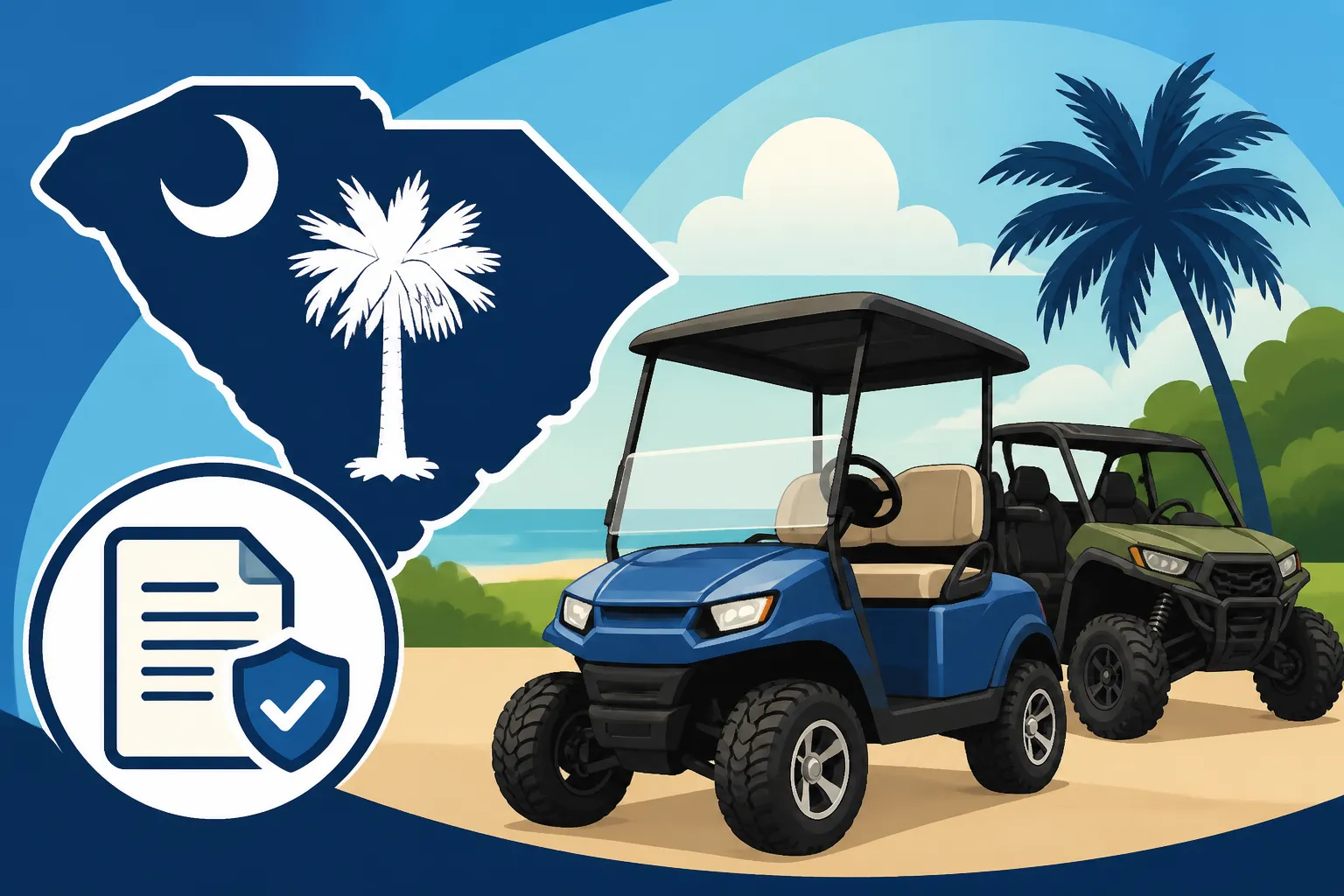
Titling a Golf Cart in South Carolina
It's easy to get tangled up in the red tape when it comes to off-road machines here in the Palmetto State. Many folks assume that because a golf cart mostly sticks to neighborhood roads or private property, it doesn't need much in the way of official paperwork. But the truth is, while a title might not always be mandatory, there are definitely times when it becomes not just smart, but absolutely essential. This guide will help you understand when and how to title your golf cart in South Carolina, making sure you're always on the right side of ownership.
Do You Even Need to Title Your Golf Cart in South Carolina?
This is often the first question that pops up, and it's a good one because the answer isn't a simple yes or no. Unlike street-legal vehicles that absolutely must have a title and registration to hit the pavement, golf carts often operate in a bit of a gray area, leading to a lot of confusion among owners.
The Common Misconception About Off-Road Machines
When you think about an ATV or a UTV that spends its life tearing up trails or working on the farm, you might assume a golf cart falls into the same "off-road" category where titling isn't always a requirement. And in some ways, you'd be right. If your golf cart is strictly used on private property—say, for zipping around your own sprawling acreage, moving equipment at a business, or cruising through a gated community where it never touches a public road—then the need for an official state title isn't typically pressed upon you.
The core idea here is control and public access. If the cart isn't interacting with public roads, the state has less immediate interest in documenting its ownership beyond basic consumer protection laws. This leniency can be a huge relief for many, allowing them to enjoy their carts without an extra trip to the DMV. However, this freedom from mandatory titling can also create headaches down the road, especially if you ever decide to sell the cart or if it gets stolen. It’s why understanding the nuances is so important, because what seems simple now might become complicated later. [South Carolina Titles Are Optional] for many off-road machines, but that doesn't always mean it's the best path to take.
When a Title Becomes Essential
While the state might not always require you to title your golf cart, there are definitely scenarios where having that official piece of paper transforms from an optional luxury into an absolute necessity. Think of it as the ultimate proof of ownership, offering a layer of protection and legitimacy that a simple bill of sale just can't match.
The biggest driver for obtaining a title for your golf cart usually comes down to financing. If you're looking to take out a loan to purchase a new or even a high-value used golf cart, virtually every reputable lender will demand a title. Why? Because the title serves as collateral for their loan. Without it, they have no legal claim to the asset should you default on your payments. This isn't unique to golf carts; it's standard practice for vehicles, boats, and even some manufactured homes. If you've been turned down for a loan because your golf cart is untitled, you're experiencing this frustration firsthand. [Lenders That Will Not Finance an Untitled Quad] will often apply the same logic to golf carts.
Beyond financing, a title acts as your ironclad proof of ownership. Imagine your golf cart is stolen. Without a title, proving to law enforcement or your insurance company that the cart legitimately belongs to you can be a real uphill battle. A title clears up any ambiguity, making it much easier to report the theft, recover your property, or process an insurance claim. Furthermore, when it comes time to sell your golf cart, a clean title makes the transaction infinitely smoother. Buyers are often wary of untitled machines, and for good reason—they want assurance that they're buying from the rightful owner and won't inherit any hidden legal headaches. Having a title in hand can significantly increase your cart's resale value and attract more serious buyers. [Why a Buyer Wants a Title in Hand] isn't just about peace of mind; it's about avoiding potential legal quagmires later on.
Understanding the South Carolina DMV's Approach to Golf Cart Titling
Navigating the South Carolina Department of Motor Vehicles (DMV) can feel like a maze, especially with the different rules for various types of vehicles. Golf carts have their own unique place in this system, which isn't always immediately clear.
The Distinction Between Title and Registration for Carts
This is where a lot of people get tripped up. In South Carolina, a golf cart typically doesn't undergo "registration" in the same way your car or a new street-legal UTV does. When we talk about getting a golf cart ready for limited public road use, we're usually discussing a golf cart permit. This permit allows you to operate your cart on secondary roads within a certain radius of your home or business, under specific conditions. It's about granting permission for operation, not necessarily about formally documenting ownership in the same vehicle system. [Buying a Golf Cart Permit for $5] is a relatively simple process that focuses on the driver and where the cart will be used, rather than the intricate details of who bought it from whom.
Titling, on the other hand, is purely about establishing and recording legal ownership. It's the state's official record of who owns the golf cart. While you might get a permit to drive your golf cart on certain roads, that permit doesn't automatically mean your cart is titled. These are two distinct processes, each serving a different purpose. One is about permission to operate, and the other is about proof of ownership. You can absolutely have a titled golf cart that never gets a permit, perhaps because it only ever stays on private land. Conversely, you could technically get a permit for a golf cart that isn't officially titled, though this can complicate things later if you need to prove ownership for a sale or insurance. Understanding this separation is key to avoiding confusion at the DMV. [South Carolina Title Only or Registration Only] (the concept applies to permits as well) underscores that you can pursue one without the other depending on your needs.
Necessary Documents for a Golf Cart Title Application
When you're ready to secure that official title for your golf cart, knowing exactly what to bring to the DMV is half the battle. Just like titling any other vehicle, the process requires specific paperwork to confirm your identity, the cart's identity, and the chain of ownership. Don't show up unprepared, or you'll likely find yourself making a frustrating second trip.
The cornerstone of your application will be Form 400, the Application for Certificate of Title and Registration. This is the standard form used for various vehicle types in South Carolina, and it's where you'll provide all the essential details about yourself and your golf cart. Make sure to fill it out accurately and completely, as any errors or omissions can cause significant delays. [South Carolina Form 400 Explained] covers what this form typically asks for.
Next, you'll need proof of ownership. If your golf cart is brand new, this will be the Manufacturer's Certificate of Origin (MCO). This document is essentially the birth certificate for your cart, issued by the manufacturer to the dealer, and then assigned to you upon purchase. If you've bought a used golf cart, you'll need the previously assigned title from the seller, or a notarized bill of sale if the cart was previously untitled. It's crucial that this bill of sale clearly identifies both you and the seller, describes the golf cart (make, model, VIN), and states the purchase price. For private sales, getting a robust bill of sale is incredibly important. If you're wondering how to craft one that holds up, resources like LawDepot can provide customizable templates for legal documents, helping you ensure all necessary information is included. [South Carolina Requires an MCO for a New Machine] and [South Carolina Assigned Titles for Used Machines] detail these primary ownership proofs. If you find yourself in a situation where the original bill of sale is missing or insufficient, you may need to explore options like a bonded title, though that's a more complex process. [South Carolina Proof of Ownership Without a Title] dives into these trickier situations.
Finally, you'll need proof of identity and residency. This typically means a valid South Carolina driver's license or ID card, and potentially a utility bill or other document showing your current physical address in the state. The DMV needs to confirm who you are and that you're a legitimate resident before issuing a title in your name. Having all these documents organized and ready will streamline your visit and get you one step closer to securing your golf cart's title.
Step-by-Step: Getting Your Golf Cart Titled in South Carolina
Once you've decided that titling your golf cart is the right move for you, the next step is navigating the actual process. It might seem daunting, but by breaking it down into manageable steps, you can ensure a smooth experience at the DMV.
Gathering Your Paperwork and Essential Information
Before you even think about heading to a DMV office, the most critical phase is assembling all your documents. Think of it like packing for a trip: if you forget your passport, you're not going anywhere. The same applies here; missing even one key piece of paper can send you right back home.
Start by laying out everything we discussed earlier. You'll need that completed Form 400, your proof of ownership (whether it's the MCO for a new cart or the assigned title/bill of sale for a used one), and your South Carolina driver's license or state ID card. Don't forget proof of your current South Carolina address, which could be a recent utility bill or a lease agreement. Double-check every single piece of information on these forms. Is the Vehicle Identification Number (VIN) on your bill of sale or MCO an exact match for the VIN stamped on your golf cart? Even a single digit off can halt the process. Ensuring your signature is exactly as it appears on your ID is also a small but important detail. [South Carolina Title Applications at the DMV] usually provides a checklist, and it's always a good idea to consult it.
For used golf carts, pay extra attention to the bill of sale. It needs to be comprehensive. It should include the full names and addresses of both buyer and seller, the date of sale, the purchase price, and a clear description of the golf cart, including its make, model, year, and that all-important VIN. A robust bill of sale provides a clear paper trail of ownership transfer. If you’re a private seller or buyer needing to draft a solid document, remember that resources like LawDepot offer templates for legal forms, including bills of sale, that you can customize to ensure all the necessary details are present and accounted for. This simple step can prevent headaches down the road.
Submitting Your Application and What to Expect
With your stack of perfectly organized paperwork in hand, it's time to head to your local South Carolina DMV office. While wait times can vary, being prepared will certainly make the experience more efficient.
When you arrive, you'll present your completed Form 400 and all your supporting documents to a DMV clerk. They will review everything carefully, often double-checking VINs against your physical cart if it's new or if there's any discrepancy. This is why having your documents in order is so vital – it speeds up their verification process. Be ready to answer any questions they might have about the cart or the transaction. Once satisfied, the clerk will collect the necessary fees. The fee for titling a golf cart in South Carolina is typically a modest amount, much less than what you might pay for a car registration. While I can't give you exact figures, expect it to be a flat fee in the double-digit range. [What a South Carolina ATV Title Costs] gives you a sense of typical titling fees for similar off-road machines, which are generally quite low.
After paying the fees, you'll usually receive a temporary receipt or confirmation. The actual physical title certificate will then be mailed to you, typically within a few weeks. Processing times can fluctuate depending on the volume of applications, so don't expect to walk out with your official title in hand the same day unless you pay an expedite fee, which is usually a separate charge for faster processing. [South Carolina Title Processing Time] is something you'll want to inquire about at the counter if you have a specific deadline. Payment methods usually include cash, credit/debit cards, or checks, but it's always smart to confirm options with your specific DMV office beforehand. [South Carolina Title Payment Methods] are generally flexible, but knowing your options can prevent a last-minute scramble. If your situation is complex, perhaps involving multiple owners or a family transfer, you might find yourself needing additional affidavits or specific legal forms. Again, resources like LawDepot can be invaluable for generating these types of documents, ensuring they meet legal standards and streamline your DMV visit.
Benefits of Titling Your Golf Cart and Avoiding Pitfalls
Deciding to title your golf cart, even when not strictly required, is a smart move that offers a surprising number of advantages. It’s about more than just paperwork; it’s about protecting your investment and making future transactions hassle-free.
Why Titling is More Than Just a "Nice-to-Have"
Think of your golf cart title as an official seal of approval for your ownership. While it might feel like an extra step, it provides a crucial layer of security and clarity that benefits you in numerous ways. First and foremost, a title establishes an undeniable chain of ownership. This means there's a clear, state-recorded history of who has legally owned the cart, from the manufacturer to its current owner—you. This is your strongest defense against potential theft or fraud. If your cart is ever stolen, law enforcement has an official record to go by, significantly increasing the chances of recovery. Without it, proving you own it might rely solely on a private bill of sale, which is much easier to dispute or forge.
Furthermore, having a clear title makes resale much, much easier. When you decide to upgrade or simply sell your golf cart, potential buyers will almost always prefer a titled machine. It offers them peace of mind, knowing they are purchasing from the legitimate owner and won't inherit any legal problems. A titled golf cart often commands a higher resale value because of this added assurance. It signals that you've been a responsible owner and that the cart's history is transparent. [Why Optional Titling Still Helps] for many machines, and golf carts are no exception. For insurance purposes, a title often simplifies claims processes, particularly for comprehensive coverage or theft. It eliminates any question about who the policyholder is insuring, speeding up payouts if the worst should happen.
Common Mistakes to Avoid During the Titling Process
Even with all the right intentions, it's easy to stumble over common pitfalls when titling your golf cart. Being aware of these traps can save you time, frustration, and potential legal headaches. The goal is a smooth process, and avoiding these missteps is key.
One of the most frequent errors is incomplete or incorrect paperwork. This includes missing signatures, an improperly filled out Form 400, or a VIN that doesn't exactly match the one on the cart. A single typo or an overlooked blank field can result in your application being rejected, forcing you to start over. [A Missing Signature Can Stall Your Title] is a prime example of a small detail that causes major delays. Always take the time to review every line and ensure all necessary parties have signed where required.
Another common issue, especially with used golf carts, is insufficient proof of ownership. Sometimes, a buyer might rely on a simple handwritten note or even just a verbal agreement from a private seller, thinking that's enough. It’s not. For the DMV, you need a verifiable paper trail. If you buy a used cart that was never titled before, a robust, notarized bill of sale is crucial. If the cart was previously titled, you need that original title, properly assigned to you by the previous owner. Don't accept excuses like "I can't find the title" or "We just did a handshake deal." Protect yourself by insisting on proper documentation. This is where tools like LawDepot can be incredibly useful, allowing you to generate comprehensive and legally sound bills of sale for private transactions, ensuring all bases are covered. This provides a level of legitimacy and detail that a casual note simply cannot.
Finally, confusing the title process with the golf cart permit process can lead to frustration. Remember, these are two separate things with different requirements and purposes. You might get a permit for road use but still need a title for ownership proof, or vice-versa. Understanding the distinction helps you pursue the right paperwork for your specific needs without getting tangled up in unnecessary steps or missing critical ones.
Here’s a quick overview to help clarify the differences:
| Feature | Golf Cart Title | Golf Cart Permit (SC) |
|---|---|---|
| Purpose | Legal proof of ownership | Permission for limited public road use |
| Issued By | South Carolina DMV | South Carolina DMV (and local authorities for specific rules) |
| Required For | Financing, clear resale, theft recovery | Operating on secondary roads (within radius) |
| Primary Doc | Form 400, MCO / Assigned Title / Bill of Sale | Form CG-1, Proof of Insurance, Driver's License |
| Cost | Modest one-time fee | Inexpensive biennial fee |
| Renewal | Not renewed (permanent unless transferred) | Renewed every five years |
| Affixed To Cart | No physical display on cart | Decal displayed on the cart |
Disclaimer
This article is for general informational purposes only and does not constitute professional advice. Laws, prices and regulations vary by location and change over time. Consult a qualified professional for guidance on your specific situation.