South Carolina Trail Etiquette Locals Expect
A quiet ride can turn tense quickly when a group blocks a narrow trail, spins tires through wet clay, or assumes every forest road is open to machines. South Carolina’s trails range from managed forest routes to private riding parks, and each has its own rules and pressures. This guide explains the trail etiquette that helps you ride safely, protect access, and be welcome back.
Know the kind of riding area you are entering
South Carolina riding areas do not all work the same way. A national forest trail, a private off-road park, and a road or track on private land can have different access rules, fees, vehicle limits, and seasonal restrictions. A good ride starts with knowing who manages the place and what they allow.
Check access, passes, and vehicle restrictions before you leave
Do not assume that a road shown on a map is open to ATVs or UTVs. In national forests, designated OHV routes are different from ordinary forest roads, and access can change with maintenance, weather, fire conditions, or land-management decisions. The Enoree OHV Trail, Parsons Mountain OHV Trail, Wambaw Cycle Trail, and Cedar Springs Trail each have their own access details to check before loading up.
Start with the land manager’s current trail information. Confirm whether the route is open, whether your machine type is allowed, and whether you need a pass. Some forest trails have width restrictions that rule out full-size side-by-sides, while private parks may set separate vehicle, age, noise, and safety requirements. The overview [South Carolina ATV Trails: Where to Ride] can help you distinguish among the state’s different riding options.
It is also worth checking for closures on the day you plan to travel. A trail that was open last weekend may be closed after heavy rain or for repair work. Before hauling across the state, review [South Carolina Trail Conditions Before You Haul] and [South Carolina Wet Weather Trail Closures]. If the details are unclear, contact the manager or park directly rather than treating a map listing or an old social media post as permission.
Mapping apps can help you understand where you are, but they do not grant access. onX Offroad can be useful for viewing routes and planning a ride, especially when you want to discuss a route with your group before setting out. Still, check the official manager’s current rules separately: a mapped line does not necessarily mean a trail is open to your machine.
Match your machine to the route
Before driving to a trailhead, compare your vehicle’s width and type with the route’s restrictions. Some routes are intended for motorcycles or narrower ATVs, not full-size UTVs. A narrow gate or posted limit is not a challenge to work around; it is a clear sign that the route is not suitable for your machine.
This check can save a frustrating day. Imagine towing a wide side-by-side to a forest trail only to discover that it cannot pass the entrance gate. The right move is to turn around and choose a route that allows your machine, not to unload and try to squeeze through or continue on an adjacent road. For planning, see [South Carolina Trails That Allow Side-by-Sides].
Private parks have their own systems too. Read their rules before arriving, including what they say about passengers, helmets, pets, sound limits, camping, and recovery charges. A park’s permission applies to its own property, not automatically to nearby public roads or forest land.
| Before you ride | What to confirm | Why it matters |
|---|---|---|
| Trail access | Open status and any temporary closures | Prevents wasted travel and unauthorized riding |
| Machine fit | Vehicle type, width, and route limits | Avoids blocked gates and trail damage |
| Pass or fee | Whether a pass is needed and how it must be displayed | Helps you meet access requirements |
| Conditions | Recent rain, standing water, and maintenance notices | Reduces damage and getting stuck |
| Group plan | Route, regroup points, and communication method | Keeps the group together without blocking others |
Share the trail with care
A considerate rider thinks beyond their own group. Narrow trails may bring you face-to-face with another machine, hikers, workers, hunters, or people dealing with a disabled vehicle. A little patience can prevent a collision, a damaged trail, or a sour interaction that affects access for everyone.
Slow down, communicate, and pass thoughtfully
Ride at a speed that lets you stop within the distance you can see. Blind corners, dips, dust, roots, and loose gravel can hide another rider. Ease off the throttle when visibility is poor, and slow further near trailheads, campsites, intersections, and places where people might be walking.
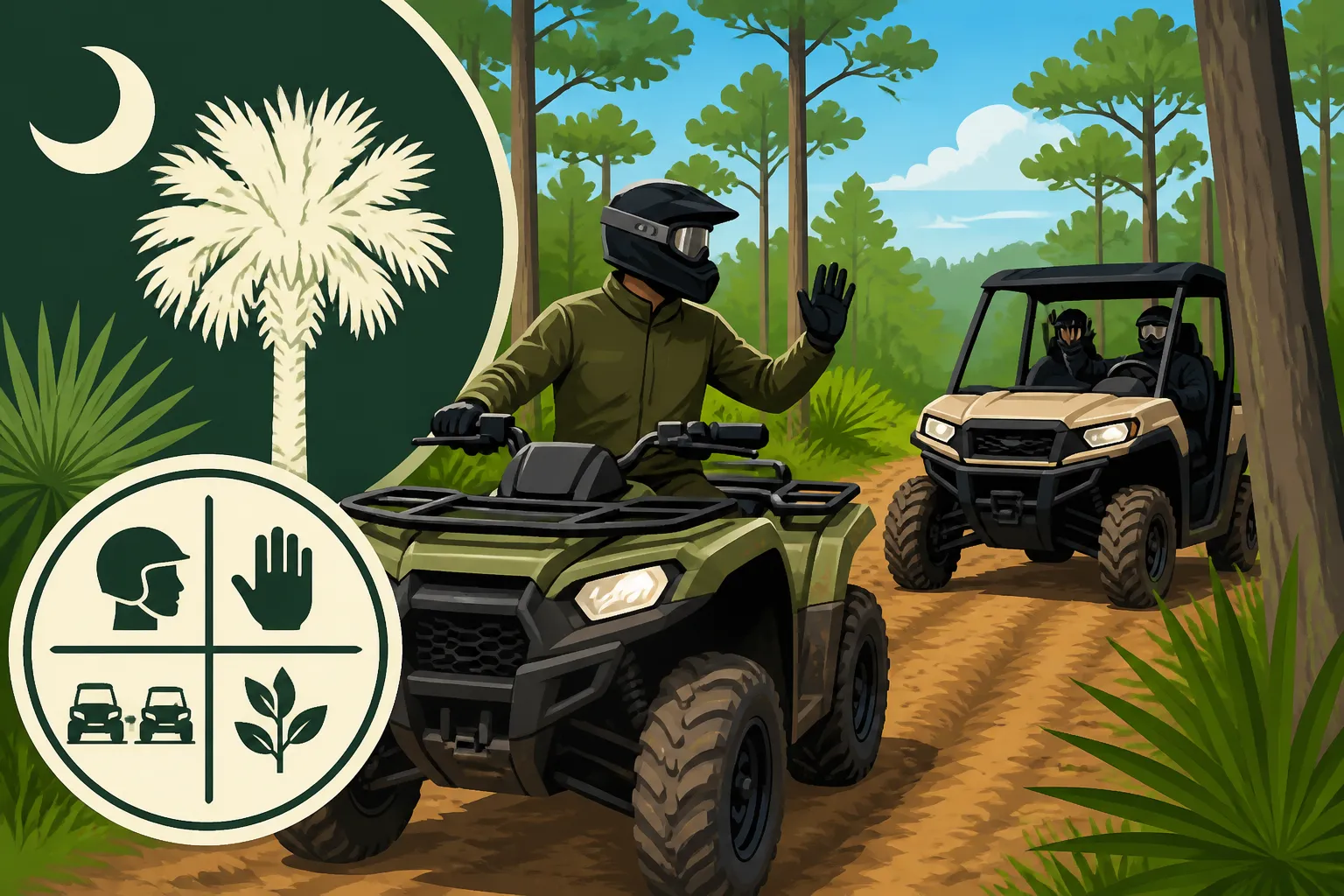
When you meet another machine on a tight section, avoid rushing to squeeze past. Slow down, make your presence known without startling the other rider, and work out who has the safer place to pull aside. A friendly wave or clear hand signal can help, but do not assume the other person has seen or understood it. On a steep or awkward section, take a moment to choose a stable, safe spot rather than stopping where either vehicle could slide.
Common trail courtesy is to be especially careful when passing a rider who is climbing or negotiating a difficult obstacle. Stopping unexpectedly can make their maneuver harder. If you are the one approaching, give them space and wait until there is a safe, obvious opening. For more on narrow trail encounters, see [Yielding on a Narrow Carolina Trail].
Keep the pass brief and controlled. Do not crowd another machine, spray it with mud, or rev aggressively to announce yourself. If dust is heavy, leave enough distance that the rider ahead can see and breathe comfortably. A few minutes of patience is much better than forcing a risky pass.
Respect other people using the land
Forest trails can be shared with more than recreational riders. Hunters may be using nearby land during designated seasons, and forestry or maintenance crews may be working on roads and access points. Slow down when you see people, vehicles, equipment, or signs of active work. Give work crews plenty of room, follow any directions or temporary signs, and do not ride around a closed area.
Do not treat a hunting-season encounter as an invitation to argue. Keep your group calm, stay on the route you are permitted to use, and avoid disturbing nearby activity. Wearing the required visibility gear when applicable and checking seasonal access notices are sensible parts of preparation. [Sharing a Sumter Forest Trail With Hunters] covers this kind of shared-use situation in more detail.
On private property, courtesy starts with permission. A gate being open, tire tracks being visible, or a trail appearing on an app does not mean you can ride there. Stay off land unless you have permission or the area is clearly open to riders under its posted terms. Do not cross a neighboring field to bypass a closed trail or reach a preferred route.
Protect South Carolina trails and riding access
A trail’s condition is shaped by what riders do, especially during wet weather. South Carolina’s clay can become slick and deeply rutted after rain. Riding thoughtfully protects the route, reduces repair needs, and helps preserve the access that local riders depend on.
Do not turn wet ground into a mud pit
If a trail is closed, too soft, or visibly deteriorating, do not ride it just because your machine can push through. Spinning tires can deepen ruts, widen the route, damage drainage, and leave a mess that takes time to repair. The damage often affects the next rider too: a shallow puddle can become a trench, and a soft edge can collapse under another vehicle.
If you encounter unexpectedly wet conditions, slow down and assess rather than charging ahead. Use the route as marked, avoid driving around puddles to make a new bypass, and turn back if the trail is deteriorating or unsafe. Bypasses widen trails and can damage vegetation or soil outside the maintained route.
A GPS track or saved offline map is helpful for orientation, but it should not override posted closures. onX Offroad may help you keep track of your planned route and location when cell service is unreliable; download or save what you need before entering a dead zone. Pair that preparation with current closure information from the trail manager, particularly after a storm.
Leave the site better than you found it
Pack out everything you bring in, including food wrappers, drink containers, zip ties, broken straps, and used parts. Do not leave trash in a fire ring or assume someone else will collect it at the trailhead. If you find litter and can safely carry it out, picking it up is a simple way to help keep a riding area welcoming.
At the staging area, park so other trailers can load, unload, and turn around. Keep access roads clear, avoid taking up extra spaces, and lower your voice near campsites or homes. If you make a mess while loading or servicing your machine, clean it up before leaving. See [Leaving a Carolina Trailhead Tidy] for more practical trailhead habits.
Sound matters too. A loud machine can be heard well beyond the trail, especially in quiet forest areas and near campgrounds. Use a properly maintained exhaust system and avoid unnecessary revving in parking areas or near other visitors. If a trail or park posts sound requirements, take them seriously rather than treating a check as an inconvenience.
Plan a safer, more enjoyable group ride
Good trail manners are easier when the group agrees on expectations before anyone reaches the trailhead. A brief plan helps prevent riders from getting separated, taking unauthorized shortcuts, or pressuring the group to continue when conditions are poor.
Set a pace and regroup plan everyone can follow
Choose a pace that works for the least experienced rider, not just the fastest machine. Before starting, agree on the route, likely turnaround point, and places where everyone can regroup without blocking the trail. Make sure each rider knows what to do if the group gets split or someone needs to stop.
On a larger ride, designate a lead rider and a sweep rider. The lead can watch for junctions and posted notices, while the sweep helps make sure no one is left behind. Keep the group compact enough to stay connected, but not so tightly packed that dust, sudden stops, or a mechanical problem create a pileup.
Before heading into an area with limited service, tell someone outside the group where you expect to ride and when you expect to return. Bring water, basic first-aid supplies, and a way to navigate if a phone battery dies. onX Offroad can be one part of that plan, but do not make a single app or phone the only way your group knows where it is going.
Handle breakdowns and disagreements calmly
If a machine breaks down, move it out of the travel path when it is safe to do so. Let approaching riders know there is a stopped vehicle ahead, and keep the group from spreading across the trail while someone troubleshoots. If the machine cannot be moved, use the safest available warning and ask for help without sending riders blindly around a corner.
If someone in your group rides too fast, tears up a wet section, or ignores a posted restriction, speak up clearly and without turning the ride into a public confrontation. Explain the concern, suggest a safer alternative, and be willing to end the ride or change routes. The goal is not to win an argument; it is to keep people safe and protect access.
At a private park, raise concerns with staff rather than confronting another group in a way that could escalate. On public land, follow posted instructions and report serious hazards or damage through the appropriate land manager’s channel. Keep notes about the location and what you observed, but do not put yourself at risk trying to manage someone else’s behavior.
Use a simple etiquette check before unloading
A quick check at the trailer can catch problems before they become trail problems. Confirm that the area is open, your machine is allowed, and your group understands the route and basic signals. Check that everyone has suitable protective equipment, water, and a plan for regrouping. Then make sure the trailer is parked without blocking the entrance or other visitors.
The access rules can differ from one riding area to the next, so keep a short checklist rather than relying on memory. For public forest riding, review [South Carolina National Forest OHV Passes] and verify how any required pass must be carried or displayed. If you are unsure whether a location is open to off-road machines at all, [South Carolina WMA Riding Is Prohibited] is a useful reminder not to assume that public land automatically means public riding access.
Good etiquette is not complicated: ride within the rules, leave room for others, respect closures, and avoid damaging the trail. Those habits make a day out smoother for your group and help preserve the welcome riders receive across South Carolina.
Disclaimer
This article is for general informational purposes only and does not constitute professional advice. Laws, prices and regulations vary by location and change over time. Consult a qualified professional for guidance on your specific situation.