Insurance Proof Before a Plate Issues
It can be incredibly frustrating to get all your ducks in a row for your new street-legal UTV, only to hit a snag at the DMV when it comes to proof of insurance. You've got your machine, you're ready to hit those secondary roads, but without the right paperwork, that coveted license plate isn't going anywhere. This guide will walk you through exactly what kind of insurance proof South Carolina requires for your street-legal UTV, how to prepare it, and what to expect when you head to the DMV to finally get that plate.
Why South Carolina Demands Insurance for a Street-Legal UTV Plate
Let's be real, nobody enjoys adding another bill to their monthly expenses, especially when it feels like just another hurdle. However, when it comes to getting a license plate for your street-legal UTV in South Carolina, insurance isn't just a good idea – it's the law. The state, understanding that these vehicles will now be sharing public roads with cars, trucks, and motorcycles, put measures in place to protect everyone involved in a potential accident. This isn't about making your life harder; it's about ensuring financial responsibility on the road.
The Law Behind the Requirement
The legislation that brought about street-legal UTV registration also mandated insurance coverage. Just like your family car, if you're operating a vehicle on public roads, you need to be able to cover damages or injuries you might cause. This requirement helps prevent situations where innocent parties are left with massive medical bills or vehicle repair costs simply because the at-fault driver was uninsured. It's a fundamental principle of road safety and financial accountability. Without this insurance, you simply won't be able to legally obtain that plate and hit the pavement.
This means that before you even step foot in a DMV office with your application, you need to have an active insurance policy specifically covering your street-legal UTV. The state isn't just asking for a promise; they need solid, verifiable proof. This requirement is a cornerstone of the new [South Carolina Street UTV Rules From November 2026] and applies universally to all qualifying machines. Don't think for a second that you can slide by without it; DMV clerks are trained to look for this specific documentation.
Understanding "Street-Legal" in South Carolina
It’s easy to get confused with all the different off-road vehicles out there, from dirt bikes to traditional ATVs. However, the insurance requirement for a plate specifically targets street-legal UTVs. These are side-by-sides that meet certain specifications for road use – things like headlights, taillights, turn signals, mirrors, and a horn. Your standard off-road quad, which is never intended for public roads, does not fall under this requirement for a license plate, primarily because it's not allowed on roads anyway. [South Carolina Does Not Register Off-Road ATVs] for public road use.
The distinction is critical because the moment your UTV becomes "street-legal" and eligible for a license plate, it transitions from a recreational off-road vehicle to a road-going vehicle in the eyes of the law. This change in classification brings with it all the responsibilities of any other motor vehicle, including mandatory insurance. If you're planning on using your UTV for quick trips to the store, commuting on secondary roads, or even just driving a short distance between trails, a license plate and the accompanying insurance are non-negotiable. It's all part of the process when [South Carolina Street-Legal UTV Registration Arrives].
What Kind of Insurance South Carolina Requires
So, you know you need insurance, but what kind? It's not just any old policy. South Carolina has specific minimum requirements for liability coverage that apply to street-legal UTVs, just as they do for cars. Understanding these numbers is crucial so you don't show up at the DMV with a policy that falls short. This is where many folks can get tripped up, thinking "any insurance" will do, only to find out they need to make adjustments.
Minimum Liability Coverage Explained
South Carolina mandates a specific amount of liability coverage to protect against bodily injury and property damage you might cause in an accident. These minimums are often expressed in a three-number format, like 25/50/25. This means:
- $25,000 for bodily injury liability per person
- $50,000 for total bodily injury liability per accident (if more than one person is injured)
- $25,000 for property damage liability per accident
This [South Carolina's 25/50/25 Liability Minimums Explained] ensures that if you are at fault in a collision, there's a baseline amount of coverage to help pay for the other party's medical bills and vehicle repairs. While these are the minimums, it's often wise to consider higher coverage amounts, especially given the rising costs of medical care and vehicle repairs. An accident, even a minor one, can quickly exceed these minimums, leaving you personally responsible for the rest.
Beyond these core numbers, South Carolina also requires uninsured motorist coverage. This is another layer of protection for you if you're involved in an accident with an at-fault driver who doesn't have insurance or doesn't have enough to cover your damages. You cannot simply opt out of this coverage; it's a mandatory part of any policy written in the state. So, when you're talking to your insurance agent, make sure they understand you're insuring a street-legal UTV and that these specific coverages are included. [Uninsured Coverage You Cannot Reject] is a critical component of your policy.
Beyond the Bare Minimum: Other Considerations
While liability and uninsured motorist coverage are what South Carolina legally requires for a license plate, many street-legal UTV owners choose to carry additional types of coverage. Think about collision coverage, which pays for damages to your UTV if you're involved in an accident, regardless of who is at fault. Given the cost of these machines, this can be a significant protection. Comprehensive coverage is another popular choice, covering non-collision incidents like theft, vandalism, fire, or damage from natural disasters.
For many, their UTV represents a substantial investment, and relying solely on the state minimums leaves them vulnerable to significant out-of-pocket expenses. Imagine your brand new side-by-side being stolen from your driveway – without comprehensive coverage, you'd be looking at a total loss. Or, consider rolling your UTV on a tricky turn; collision coverage would be your saving grace. While these aren't required for a plate, they offer peace of mind and are often highly recommended by insurance professionals. When discussing your options, be sure to ask your agent about all available coverages to ensure your specific needs are met for your valuable machine. [South Carolina Street UTV Insurance Rules] are about more than just the basics.
Preparing Your Proof of Insurance for the DMV
You've got your policy, it meets the state's minimums, and you're feeling good. But before you race off to the DMV, you need to make sure you have the right kind of proof. The DMV isn't just going to take your word for it. They need official documentation that verifies your coverage is active and meets all legal requirements. Showing up unprepared is a surefire way to get turned away and have to make a second trip, which nobody has time for!
Acceptable Forms of Proof
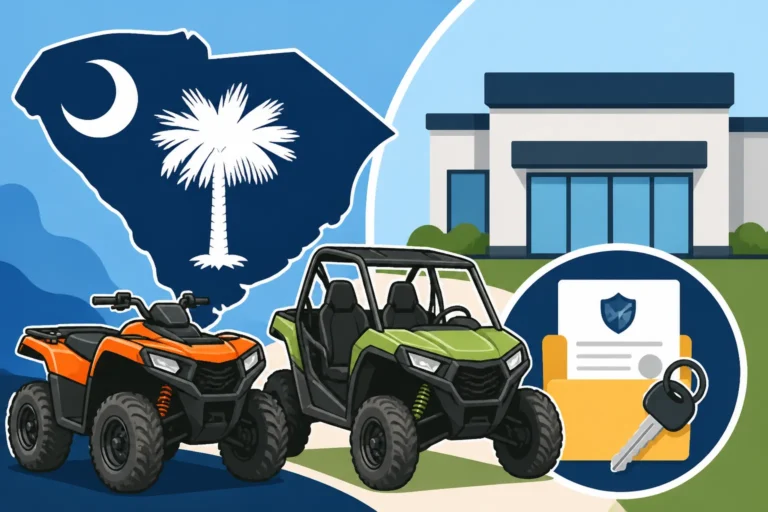
When you head to the South Carolina DMV to register your street-legal UTV and get your plate, you'll need to present one of several accepted forms of proof of insurance. The most common and widely accepted form is your insurance card. This small card, usually issued by your insurance company, typically includes key information like your policy number, effective dates, the vehicle covered (your UTV's VIN), and the name of the insured. Make sure the effective date on the card shows that your policy is active on the day you visit the DMV. An expired card will not be accepted.
Another acceptable document is a copy of your insurance policy declarations page. This is often a more detailed document that outlines all your coverages, limits, deductibles, and other policy specifics. Sometimes, insurance companies can also provide a binder or a certificate of insurance directly to the DMV or to you, which serves as temporary proof of coverage until the official cards or policies are issued. Always double-check that whatever document you bring clearly states it's for your specific UTV, identified by its VIN, and that it shows continuous coverage meeting South Carolina's minimum liability requirements. This documentation is essential for [South Carolina Insurance Proof at Registration].
Common Pitfalls to Avoid
One of the biggest mistakes people make is bringing in an insurance card for their car, thinking it covers their UTV. Unless your UTV is specifically listed on that policy or card, it won't be accepted. You need a dedicated policy or a policy endorsement that explicitly names your street-legal UTV. Another common issue is bringing an expired insurance card or a card that shows a future effective date. Your coverage needs to be active on the day you're at the DMV. Clerks are meticulous about dates.
Furthermore, make sure the VIN on your insurance document precisely matches the VIN on your UTV's title or Manufacturer's Certificate of Origin (MCO). Any discrepancies can cause delays. If you've just purchased your UTV, ensure you've called your insurance provider before your DMV visit to get the policy set up and the proof mailed or emailed to you. Don't wait until the last minute! Having all your [South Carolina Paperwork for a Street UTV] in order, including accurate and up-to-date insurance proof, will make the process smooth and stress-free.
Frequently Asked Questions About UTV Insurance and Plates
Navigating the world of UTV ownership and registration can definitely bring up a lot of "what if" scenarios. Especially when it comes to insurance, people have legitimate concerns about keeping their coverage active, understanding what their existing policies cover, and generally avoiding any missteps that could prevent them from getting that crucial license plate. Let's tackle some of the most common questions that pop up for street-legal UTV owners in the Palmetto State.
What Happens If My Insurance Lapses?
Life happens, and sometimes, through oversight or financial hardship, an insurance policy can lapse. If your street-legal UTV's mandatory liability insurance policy lapses, you're immediately in violation of South Carolina law if you drive the vehicle on public roads. Even if you have a valid license plate, the moment your insurance isn't active, that plate essentially becomes null and void for road use. You could face fines, penalties, and potentially even have your license or registration suspended if caught operating an uninsured vehicle.
Beyond the legal ramifications, the biggest risk is the financial exposure. If you get into an accident without insurance, you are personally responsible for all damages and injuries. This could lead to massive out-of-pocket expenses, lawsuits, and severe financial distress. It's simply not worth the risk. If you find yourself in a situation where your policy might lapse, contact your insurance provider immediately to discuss options. The cost of maintaining continuous coverage pales in comparison to the potential costs of an uninsured accident. This is why [Liability Insurance Is Mandatory for a Street UTV].
Can I Use My Auto Insurance Policy?
This is a really common question, and the answer is usually "no" – or at least, "not directly." Most standard auto insurance policies are written specifically for cars, trucks, and SUVs and do not automatically extend coverage to recreational vehicles like ATVs or UTVs, even if they are street-legal. While some insurance carriers might offer an endorsement or a rider to an existing auto policy to include your street-legal UTV, it's more common to get a separate, dedicated policy for it.
It's critical not to assume your UTV is covered under your existing car insurance. Always call your insurance agent and explicitly tell them you have a street-legal UTV that requires liability coverage for a South Carolina license plate. They will confirm the specific type of policy needed and ensure all state minimums are met. Getting a quote for UTV insurance is usually quick and easy, and it ensures you have the proper protection and documentation when you finally apply for [The Rear Plate a Street-Legal UTV Must Carry]. The small investment in a specific policy is worth the peace of mind and legal compliance.
Here's a quick comparison of what you need to know about insurance for your street-legal UTV:
| Requirement Category | Detail | Key Takeaway |
|---|---|---|
| Mandatory Coverage | Liability Insurance (Bodily Injury & Property Damage) | Absolutely required for a license plate in South Carolina. |
| Minimum Limits | 25/50/25 (Bodily Injury per person/per accident, Property Damage per accident) | Must meet or exceed these figures for DMV acceptance. |
| Additional Mandatory | Uninsured Motorist Coverage | Automatically included with your liability policy; you cannot decline it. |
| Recommended Coverage | Collision, Comprehensive | Protects your investment (your UTV) from damage, theft, etc. Not required for plate. |
| Proof for DMV | Insurance Card, Declarations Page, Binder, or Certificate of Insurance | Must be current, show correct VIN, and meet SC minimums. |
| Common Mistake | Assuming car insurance covers UTV, using expired proof, incorrect VIN. | Always verify with your agent and double-check all documents. |
| Consequence of No Proof | No license plate issued, legal penalties if caught driving uninsured. | Essential for legal operation on public roads. |
Remember, getting your street-legal UTV on the road in South Carolina is an exciting step, but it comes with responsibilities. Ensuring you have the correct and active insurance policy is one of the most important boxes to tick on your journey to getting that license plate. Be thorough, ask questions, and don't hesitate to confirm everything with your insurance provider and the DMV to avoid any last-minute surprises. Knowing your [South Carolina Title and Registration Costs] and including insurance will make your budgeting much easier.
Disclaimer
This article is for general informational purposes only and does not constitute professional advice. Laws, prices and regulations vary by location and change over time. Consult a qualified professional for guidance on your specific situation.